15 million people. That is how many live with a severed connection between mind and body.
Treatments? Barely any that work. So when I read about pigs—completely severed pigs—starting to walk again, my skepticism met my curiosity head-on. They didn’t just heal. They functioned.
The team is led by Michael Lebenstein-Gumowski in Russia. And yes, there is editorial help from Sergio Canavero. You know Canavero. In 2015 he said human head transplants were two years away. He was wrong about the time, obviously, but he never stops pushing. With Russia updating its organ laws to include spinal cord tissue, the air smells different. Charged. Dangerous. Maybe exciting.
How You Cut a Nerve (and Glue It Back)
Let’s look at the surgery.
They anesthetized the pigs. Removed the bone. Cooled the spinal tissue. Then sliced right through the mid-back cord. Brain cut off from the abdomen down. Severe injury. Complete paraplegia.
They put the cut ends near each other. Close.
Three pigs got a shot. The “fusogen.” It’s polyethylene glycol. PEG. You see this stuff in lotions. Laxatives. Drug delivery systems. They mixed it with chitosan—extracted from crustacean shells—and injected it into the wound. Then they flushed the pigs’ blood with it.
Two control pigs got nothing but saline or nothing at all. Just stabilization.
Here is the protocol after the cut:
– Electrostimulation to the legs. 20 minutes. Twice a day.
– Anti-inflammatories. Drugs to stop bowel obstructions.
– For a week, the experimental pigs got more PEG in their blood.
Silence for two days.
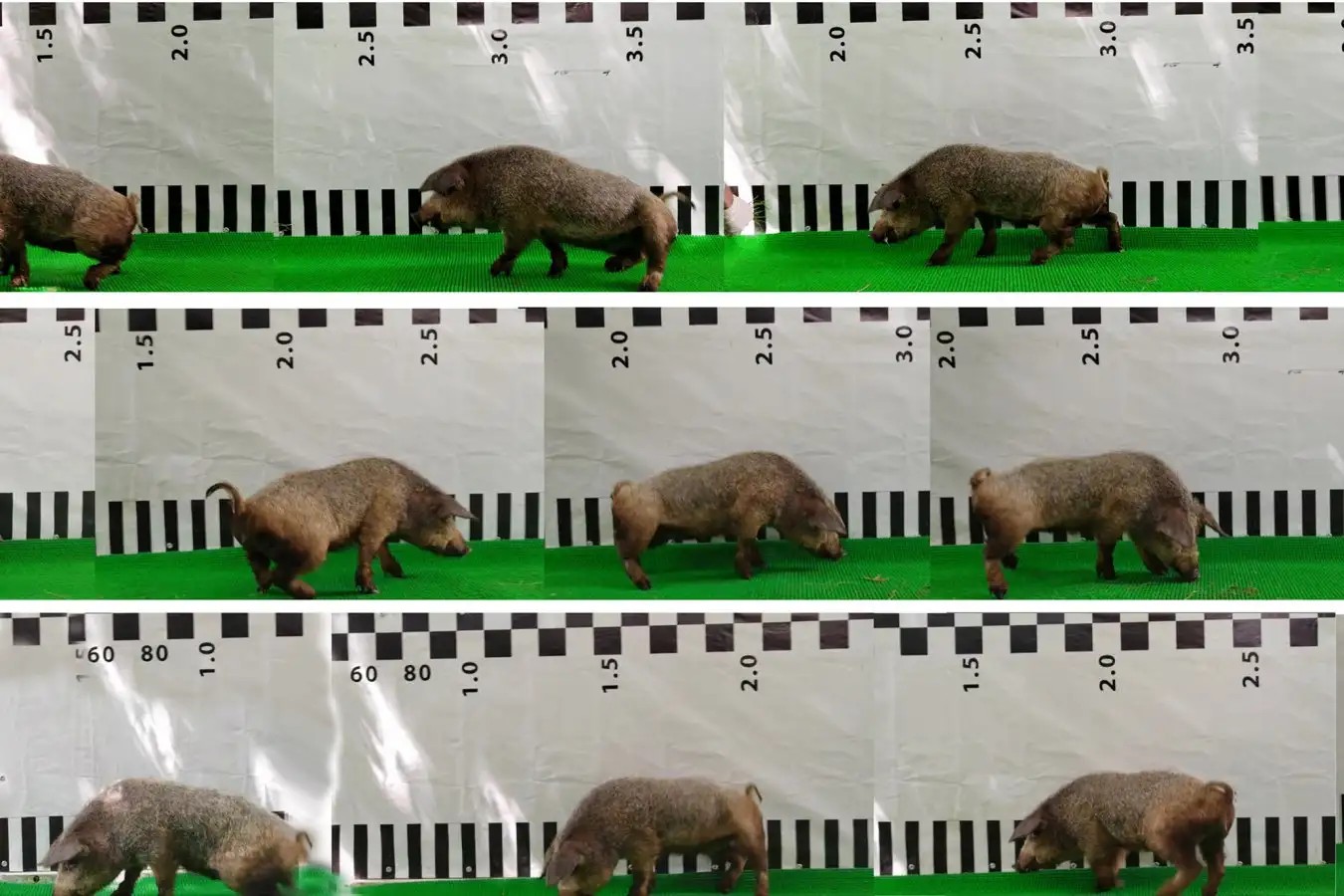
Then movement. One pig twitched a hind limb. All three responded to pinpricks. By day seven? One tried to stand.
Day 60 arrived. The controls? Still paralyzed. No movement. No sensation. The treated pigs? Walking. Unsteady, yes. Clumsy, sure. But walking. Pelvic control returned. Some touch sensitivity came back.
They looked under the microscope. Less degeneration in the treated cords. And there were axonal bridges. Thick. Twisted nerve fibers stretching across the gap. Like vines climbing over a broken fence.
PEG acts like sealant. It stops nerves from rotting before they can fuse. Chitosan acts like scaffolding. Hold everything up while it heals. It is theory, of course. Glue wires end-to-end, and if some touch, electricity flows. But nerves aren’t copper wires.
The spinal cord is a dense bundle… immune cells, blood vessels… all undergoing immediate damage… Even if some reseal… random regrowth is ineffective.
Mice studies tell us this. Guide the axons? You might get function. Let them grow randomly? Useless noise. Previous researchers laughed at fusogens. They thought it was too good to be true. Random firing. False signals.
Lebenstein-Gumovski says they checked for this. Video evidence. Controlled cuts. Control pigs stayed dead-end. But he admits, future tests will need electrophysiology. Direct measurement. To prove the signals aren’t ghosts.
Is the Brain the Next Step?
Melissa Andrews at Southampton calls the results “striking.” Standing after injury is a huge deal. Feeling a pinprick? Massive. But she points out a flaw. They cooled the spine for a minute before cutting.
Real trauma doesn’t cool you down. It burns. Inflames. Destroys.
Does the cooling mask the reality? Maybe. Andrews says it’s encouraging though. Still.
Back to Canavero.
I asked Lebenstein-Gumovski what the goal really was. He said “repair.” Structure and function. Human paralysis. But Canavero is in the mix. You cannot separate this work from his broader dream. Fusogenic neurosurgery. That’s the term. Bioengineering, membrane fusion, neuroplasticity, all braided together.
He says they want independent groups to replicate it. Several countries. Big sample sizes. No promises. Just validation. “We do not move toward clinical translation… before… highest possible level of care,” he claims.
Then come the human trials. Cadavers already done. But dead flesh behaves differently than living tissue.
Real injury is chaos. Inflammation floods the area instantly. Scar tissue forms in minutes. Lebenstein-Gumovski compares it honestly. Putting a “quantum computer… into a forest cabin.” The tech exists. The ecosystem doesn’t.
For old injuries, this won’t work. Too much scar tissue. They are looking at donor spinal segments to bridge those gaps instead. This requires transplanted nerve tissue.
Hence the new Russian law. Effective September 1st. Nerves and spinal cord fragments are now transplantable tissue. I checked other countries. Israel, the US—stem cells maybe, but not raw nerve transplants on a list like this.
Canavero isn’t shy. He says this study is a “key step toward brain transplants.” He claims trials for spinal fusion in paralyzed people are scheduled for late this year.
Really? Late this year?
From Robert White’s monkeys in the 70s (no nerve reconnection) to modern transhumanists dreaming of younger clone bodies… it feels like paralysis treatment is a side dish. The main course is immortality. Or at least, swapping heads.
The field is messy. Claims outrun data. Fusogenic surgery needs eyes on it. Independent ones. Transparent data. Not press releases.
And we need a line in the sand. Therapy for the paralyzed? Noble. Brain transplants? Ethically terrifying.
If you blur those lines, you kill the promise. Not because the science is bad. But because people stop listening when it starts sounding like sci-fi fiction.
The pigs are walking.
Now who decides if that is medicine?