When a species vanishes, the silence it leaves behind is deafening. The extinction of the Pinta Island tortoise and the West African black rhino isn’t just a footnote in a biology textbook. It is a warning shot. These losses highlight how fragile our global biodiversity really is.
We look back at the dodo or the woolly mammoth and see extinct animals that once roamed or fluttered across our planet. But the tragedy of those older losses is mirrored by the recent ones. It creates a pattern. A cycle of disappearance that we are accelerating.
Factors like habitat loss, overexploitation, and human encroachment are not distant threats. They are happening now. They are squeezing out plants and animals at an alarming rate. We need to look at the species that are gone to understand what we stand to lose.
Here is a closer look at 12 remarkable species that have vanished. Each one serves as a stark reminder. We must protect the remaining biodiversity before the list grows longer.
The Passenger Pigeon
Think about a bird so common that its wings blocked out the sun. That was the passenger pigeon. In the 19th century, flocks could stretch for miles and last for hours. The sheer number of them seemed infinite.
Humans hunted them by the billions. They were seen as pests, as food, as something that would never run out. The last individual, Martha, died in captivity in 1914. The species was gone in a few short decades.
Why does this matter today? It shows how quickly a seemingly abundant population can collapse. We assume some resources are inexhaustible. The passenger pigeon disproves that assumption. It reminds us that abundance is not immunity.
You might think extinction is a slow, tragic fade. It isn’t.
For the passenger pigeon, it was a lightning strike. These birds weren’t just numerous. They were a force of nature. Flocks were so dense they blotting out the sun for days. Farmers watched their fields vanish in minutes. The birds ate faster than they could grow back.
When Europeans arrived, there were 3 to 5 billion of them. That number is hard to grasp. It’s more than the human population today. It was the most abundant bird in North America. And then, it was gone.
Why did it happen so fast? Because nature and human expansion don’t always share space well. Humans hunted them relentlessly. They cut down the forests the pigeons relied on. But climate change played a role too. It shifted habitats. It altered food sources. The birds couldn’t adapt quickly enough.
By 1914, only one remained. Martha. She died in the Cincinnati Zoological Garden.
The last of a species. Gone.
This story of loss isn’t just about one bird. It’s about how quickly abundance can turn to absence. And it sets the stage for other tragedies. Like the one that followed in the southern hemisphere.
The Thylacine’s Decline
While the passenger pigeon fell in North America, another story was unfolding in Tasmania. The thylacine, or Tasmanian tiger, was facing a different kind of pressure. It wasn’t hunted for food. It was hunted for sport and protection of livestock.
Farmers saw them as predators. They were wrong, mostly. But the fear was real. The government paid bounties. Hunters tracked them down with dogs. It wasn’t long before the thylacine’s numbers dwindled.
Habitat loss added to the problem. Human settlement expanded. The wild spaces shrank. The thylacine, already rare, became rarer.
By the 1930s, only a few remained in captivity. The last known individual died in 1936. At Hobart Zoo.
Was it inevitable? Maybe. But it wasn’t just bad luck. It was human action. Direct and decisive.
These two extinctions. One in weeks. One in decades. Both caused by the same thing. Humans taking too much, too fast.
We still learn from this. Not always. But sometimes. When we see a species on the brink, do we act? Or do we wait until it’s too late?
The passenger pigeon is gone. The thylacine is gone. What remains is the question of what we choose to save next.
The Last Stand of the Thylacine
It wasn’t just bad luck that wiped out the thylacine, also known as the Tasmanian tiger. It was a systematic eradication.
Look at the beast. Striped back. Dog-like snout. It stood about six feet long, including the tail, making it the largest carnivorous marsupial to ever roam modern Earth. You’d think that size and adaptability would be enough to survive. Humans, however, had other plans.
Farmers in Tasmania didn’t see a unique marsupial. They saw livestock killers. The government handed out bounties. That turned a scientific curiosity into a target. Shoot them for the money. Protect the sheep. Simple logic for a brutal outcome.
The result was a sharp decline.
Habitat loss played a role. Introduced species like feral dogs added competition. But the direct hunting was the nail in the coffin. The last known individual, a male named Benjamin, died in captivity at Hobart Zoo on September 7, 1936.
Steller’s Sea Cow
Now look at the ocean.
If you think the thylacine’s story is tragic, meet the Steller’s sea cow.
Named after Georg Wilhelm Steller, a German naturalist who accompanied Vitus Bering on an expedition to the Bering Sea in 1741, this giant sirenian was found only in the Commander Islands near Alaska. It was the largest member of the now-extinct order Sirenia.
Steller described them as “very gentle and tame.” He noted they would not flee from boats. In fact, they would often approach. They were curious. That curiosity proved fatal.
The population was small to begin with. These animals moved slowly. They grazed on kelp forests. They gave birth to single calves and had long intervals between pregnancies. Any pressure on such a slow-breeding species is catastrophic.
Humans hunted them for meat and blubber. The blubber was used as lamp oil. The meat was food for sailors stranded in the harsh Bering environment. The sea cows were easy to catch. You could spear them while they floated in shallow waters.
Within 27 years of Steller’s discovery, the species was gone.
The last Steller’s sea cow was likely killed around 1768. That’s less than three decades.
Consider the contrast. The thylacine lasted into the 20th century. The sea cow was gone in the 18th. Both suffered from human expansion. Both were viewed as resources to be exploited rather than parts of an ecosystem.
Why do we keep repeating this pattern?
We see a large, slow-moving animal with no natural fear of humans. We see a valuable resource. We take. We don’t account for the rate of reproduction. We don’t account for the fragility of isolated populations.
The thylacine remains a symbol of what might have been. Photos exist. Museums hold skeletons. But the sea cow is harder to visualize. Its absence is a blank space in the North Pacific.
There are still relics. Bones wash up on beaches. Sometimes a skull surfaces in the mud. But no living creature swims in those waters with the massive paddle-like tail and barrel-shaped body of the Steller’s sea cow
The Steller’s sea cow didn’t stand a chance.
Discovered in 1741 by Georg Wilhelm Steller aboard the Vitus Bering expedition, this massive marine mammal lived in the kelp-rich cold waters of the Commander Islands in the Bering Sea. Steller documented it with the awe due a leviathan. He was also its last witness.
The timeline is brutal. Just 27 years after being scientifically described, the Steller’s sea cow was declared extinct.
Why so fast? Early explorers and fur traders wanted everything. Meat. Fat. Hide. They didn’t just hunt them for food. They hunted them for profit. The kelp forests themselves weren’t destroyed by pollution or climate change. The ecosystem was intact. It was the animals themselves that were wiped out by sheer overexploitation.
This human-induced extinction is a textbook case. It’s often cited in discussions of the Anthropocene epoch. It highlights how quickly biodiversity can collapse when humans decide an animal is a resource rather than a species. It’s a grim preview of the sixth mass extinction we’re heading toward.
But the Steller’s sea cow wasn’t alone in disappearing under the weight of human desire.
The Quagga
Enter the Quagga.
This was not a zebra. Not exactly. It was a subspecies of the plains zebra (Equus quagga ), native to South Africa. Or at least, the southern part of it.
The Quagga looked like a zebra had been caught in a filter. The front half of its body bore the distinct black-and-white stripes. The rear half? Just brown. Plain brown. Like a horse that had given up halfway through painting.
“We have seen many horses, asses, and zebras; but we never saw any thing so very singular and strange as the Quagga.”
— John Barrow, 1801
This “singular and strange” animal became a favorite target for Dutch settlers in the Cape Colony. By the mid-18th century, they were being hunted for meat and leather. But it wasn’t just hunger. It was sport. And curiosity.
The Quagga extinction timeline is almost as short as the sea cow’s, though less precisely recorded in scientific literature initially. The last wild Quagga was shot in the 1870s in the Orange Free State. The last captive one died on August 12, 1883, at the Artis Magistra zoo in Amsterdam.
Thirty years after the Steller’s sea cow vanished, the Quagga was gone.
Both extinctions share a common thread. They weren’t slow fades. They weren’t victims of gradual habitat loss. They were victims of overhunting driven by human consumption and novelty.
The Steller’s sea cow was too big to hide. It moved slowly. It was easy to kill.
The Quagga was slower than other zebras. It had weaker legs. It couldn’t outrun a galloping horse. It was the easy mark in a herd.
Why These Extinctions Matter Today
We often think of extinction as something that happens in the distant past. Or in places far away. But
Stripes faded into plain brown. That was the visual signature of the quagga. It wasn’t a hybrid of a horse and zebra in the way a zorse is. It was its own thing. A distinct mammal. Stripes clung to the head and neck before vanishing entirely over the reddish-brown hindquarters.
Native to the semi-desert regions of South Africa, the species vanished in the 1870s. Overhunting did the job. The last captive individual died in an Amsterdam zoo in 1883. Genetically, the original line is gone.
Or so we thought.
Breeding for Appearance, Not Lineage
Since 1987, a group of scientists has been trying to reverse that loss. They aren’t cloning DNA from museum specimens. They don’t have enough of it. Instead, they are using selective breeding.
The Quagga Project looks at plains zebras. Specifically, they look for individuals with lighter bodies and fainter stripes. They mate those individuals. They keep breeding the offspring that look most like the historic quagga.
The goal is phenotypic resemblance. Do the animals look like quaggas? Yes. Do they act like quaggas? Partially. Are they genetically identical to the extinct animals? No.
“They are not genetically identical to the original quagga population.”
The animals produced by this project are sometimes called Rau quaggas. The name comes from Reinhold Rau, one of the founders. It’s a practical label. It acknowledges that these are modern zebras with a specific, selected appearance.
Why This Matters
Critics argue this isn’t de-extinction. You can’t bring back a species if you don’t have its genome. The original quagga had unique genetic traits that are lost.
But supporters point to the ecological role. Quaggas were grazers. They shaped the landscape of their habitat. Having animals that fill that niche, even if they aren’t the exact genetic match, has value.
The project also highlights a broader truth about conservation. We often want to snap our fingers and restore the past. Biology doesn’t work that way. We can approximate. We can mimic. We can create something that looks right.
But it won’t be the same.
The Rau quaggas roam in South Africa today. They have stripes on their necks. Their backs are brown. They are close. But they are not the animal that died out in the 19th century.
We are left with a compromise. A living tribute. And a reminder that some losses are permanent. Even when we try to rewrite history.
The Archaeopteryx Misconception
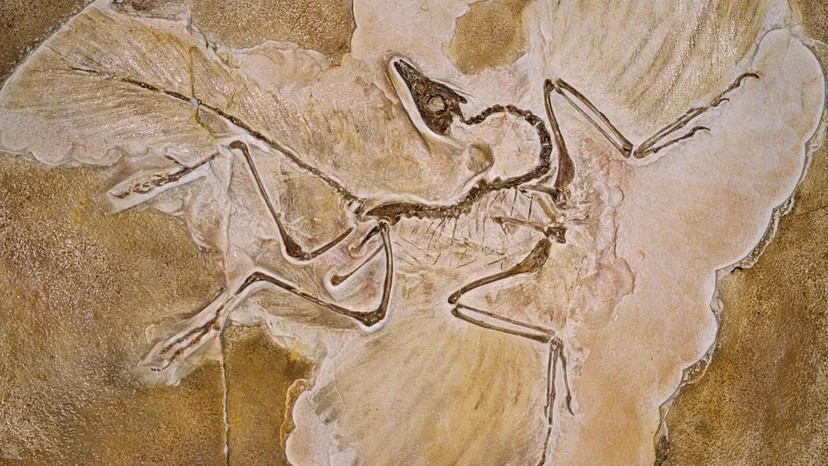
It has been nearly two centuries since Archaeopteryx first showed up in the fossil record, yet people still get its story wrong. The usual headline claims it was the first bird. Or worse, that it was a clumsy flyer learning to take to the skies. Neither is true.
The creature was a messy hybrid of traits that makes modern taxonomy uncomfortable. It had feathers. It had wings. But it also kept the reptilian baggage: a long bony tail with stiff vertebrae, a flat breastbone lacking a keel for muscle attachment, and a full set of sharp teeth. Most telling were the claws on its wings. You do not keep those if you plan to soar.
Scientists now believe Archaeopteryx spent most of its time on the ground or in trees. It likely ran, leaped, and climbed. The wings were probably used for gliding or stability while dropping from branches, not powered flight. This behavior fits the complex, forested ecosystems of the Jurassic Period, roughly 150 million years ago. Long before humans existed, these environments were already intricate webs of survival.
The species eventually vanished. Ecological shifts likely drove them out or wiped them out entirely. But their legacy remains. As the most primitive known bird, they bridge the gap between theropod dinosaurs and modern avians. They prove evolution is not a straight line. It is a branching process of trial and error.
Saber-toothed Cat
The Misnamed Icon of the Ice Age
We call them saber-toothed tigers. This is wrong. They were never tigers. The label stuck because the teeth were unmistakable, long curved daggers that defined an era. The real name, Smilodon, refers to a group of cats that ruled during the Cenozoic Era. They didn’t just appear. They evolved into apex predators with a specific strategy for taking down massive prey.
The fossil record is full of them. But nowhere else is their presence as concentrated as in Los Angeles. The La Brea Tar Pits have yielded a staggering number of specimens. This density of finds is why Smilodon holds the title of California’s state fossil. It’s not just a random choice. It’s a recognition of how these animals were trapped. The asphalt kept them. It kept everything.
Social Survival in a Brutal World
We picture them as lone hunters. Sneaking through the brush. Waiting for the kill. That’s the movie version. The bones tell a different story. Many specimens show clear signs of severe injury. Broken jaws. Infected wounds. Old fractures that healed over time.
How did they survive these injuries? A solitary animal with a broken jaw starves. It doesn’t get to heal for months. The evidence suggests these cats lived in groups. They supported each other. They shared kills. They tended to the sick and wounded. This wasn’t just about strength. It was about cooperation. The dagger teeth required a specific hunting style. They couldn’t bite and hold like modern lions. They had to clamp down and hold still. This made them vulnerable to injury. Group living mitigated that risk.
The End of the Giant Cats
They didn’t vanish overnight. The extinction event hit roughly 10,000 years ago. The end of the Pleistocene. The climate shifted. The large herbivores they hunted—mammoths, giant bison—disappeared or migrated. The cats couldn’t adapt fast enough. The specialized tools of their trade became liabilities in a changing world.
Plesiosaur
Swimmers of the Ancient Seas
Leaving the tar pits for the open ocean brings us to the plesiosaur. The name sounds clunky, but the creature was elegant. These were marine reptiles, not dinosaurs, though they lived in the same broad era of the Mesozoic. They dominated the seas long before the tyrannosaurs walked the land.
The popular image is the Loch Ness Monster type: a small head on a long neck, four flippers, and a small tail. This is the plesiosaur body plan. It worked. It allowed them to glide through the water with minimal drag. The flippers provided lift and steering. The body acted as a stabilizer. They weren’t the fastest swimmers. They weren’t built for speed like a shark. They were built for endurance and precision.
Diverse Forms and Feeding Strategies
Not all plesiosaurs looked the same. Some had massive heads and short necks. These were the smashers. They hunted large, powerful prey. Others had tiny heads and incredibly long necks. These were the suction feeders or the needle-like strikers. They could dart in, snap up small fish, and retreat before the prey knew what hit them. The
The Myth of the Living Plesiosaur
The plesiosaur ruled the ancient oceans from the Jurassic through the Cretaceous periods. That is a span of about 201 million to 66 million years. Some of these aquatic reptiles were massive. They could reach lengths of up to 65 feet, or 20 meters.
Their anatomy was distinct. They did not have the long tails of their dinosaur cousins. Instead, they evolved four large, paddle-like limbs. These flippers allowed them to maneuver with surprising adeptness in water. The body plan supported powerful swimming strokes.
This unique shape is why they keep appearing in modern folklore. Specifically, they are often linked to the Loch Ness monster. The legend claims a surviving plesiosaur lurks in the depths of Scotland’s Loch Ness.
This idea is scientifically unsupported. It is also highly romanticized. There is no evidence that any plesiosaur survived the mass extinction event that wiped out non-avian dinosaurs. The creature in the loch is likely a misidentified seal, a swimming log, or simply human imagination.
The reality of the plesiosaur is far more interesting than a cryptid. These were not dinosaurs. They were fully adapted for marine life. Their necks and heads varied wildly. Some species had extraordinarily long necks paired with tiny heads. This suggests a specialized feeding strategy, perhaps suction-feeding on small prey.
Hallucigenia
The Dodo’s Tragic Legacy: A Cautionary Tale of Evolutionary Isolation
Fast forward from the Cambrian explosion to the quieter, slower rhythms of recent history, and you land on one of the most infamous names in extinction: the dodo. If Hallucigenia was a bizarre experiment in body plans, the dodo was an experiment in survival that ended in total failure. It is the poster child for human-caused extinction, a bird so uniquely vulnerable that its name has become synonymous with foolishness, even though the real fool was us.
Rudderless. Wingless. Fearless.
That is the problem with evolution in a vacuum. The dodo (Raphus cucullatus ) evolved on the isolated island of Mauritius in the Indian Ocean. For millions of years, it existed without predators. No hawks. No mammals. No teeth waiting in the dark. So, it stopped flying. It lost the need for a large keel bone to anchor powerful flight muscles, making it heavy and grounded. It grew fat, storing energy for scarce times. It became comfortable.
Then, humans showed up in 1598.
They didn’t even need to be the primary killers. The dodo was hunted, yes. Sailors ate them. But the real extinction driver was indirect. Rats. Pigs. Monkeys. These invasive species, hitching rides on Dutch ships, decimated the dodo’s ground nests. The birds laid only one egg per clutch. They incubated it for months. One rat raid, and the line ends.
Why does this matter today? Because we are still making the same mistake, just on a global scale. We disrupt ecosystems, introduce invasive species, and assume that because a creature hasn’t gone extinct yet, it is safe. The dodo’s story is not just about a clunky bird. It is about the fragility of isolated ecosystems.
The Myth of the “Stupid” Bird
Pop culture loves to paint the dodo as an idiot. It waddled into traps. It stared at hunters. It couldn’t escape. This is a distortion. The dodo wasn’t stupid; it was naive. In a predator-free world, caution is a waste of energy.
Consider the energy budget. Flying is expensive. Maintaining flight muscles requires constant fuel. For a bird living in a resource-limited island environment, shedding flight capability was a strategic advantage, not a defect. It allowed for greater fat storage and ground foraging. The dodo was perfectly adapted to its world. It just wasn’t adapted to ours.
This brings us to a harder truth about conservation. We often judge species by how well they fit into a human-centric view of “intelligence” or “adaptability.” But adaptation is context-dependent. A trait that is fatal in one environment is essential in another. The dodo’s lack of fear was its Achilles’ heel. Once humans introduced the concept of predation, the dodo had no behavioral toolkit to survive.
Genetic Echoes
Here is the twist that most people miss. The dodo is not entirely gone. Or rather, the lineage persists in ways we are only beginning to understand. Recent genetic studies have traced the dodo’s closest living relatives to the Nicobar pigeon. The two species diverged roughly 30 million years ago, but they share a common ancestor
It is time to stop calling the dodo stupid. That stereotype is lazy, and it ignores basic evolutionary biology. The bird wasn’t slow because it was lazy. It was slow because it was safe.
Mauritius, an isolated island in the Indian Ocean, offered a paradise with zero natural predators. Food grew on the ground. Lots of it. When you don’t need to fly away from a tiger or a hawk, flight becomes a metabolic expense you can drop. So, the dodo traded aerial agility for ground-based foraging. It waddled because it had no reason not to.
Then came the Dutch sailors in the late 1500s.
The peace shattered. Sailors weren’t looking for a challenge; they were looking for calories. The dodo was large, flightless, and unafraid of humans. It was the ultimate convenience store for hungry crews. But the hunters were only half the problem.
The real devastation came from the stowaways.
Rats, pigs, and dogs followed the ships. These invasive species didn’t just compete for food. They raided the dodo’s nests. The birds laid their eggs on the ground, unprotected. Rats ate them. Pigs trampled them. The population collapsed not just from direct hunting, but from the complete destruction of their reproductive cycle.
Extinction happened in a blink of geological time. Within decades of first contact, the dodo was gone.
The Ghost in the Genes
The dodo is gone for good. We only have skeletons and a few feathers to study. But for another extinct giant, the woolly mammoth, death is not final. Not yet.
Scientists are currently working on bringing the woolly mammoth back from the dead. This isn’t just science fiction. It is a complex, high-stakes genetic engineering project.
The goal isn’t to create a museum exhibit. It is to restore the Arctic tundra ecosystem.
Mammoths didn’t just roam. They shaped their environment. They knocked down trees, packed down snow, and created open spaces that allowed grass to grow. Their massive hooves created melt ponds that supported insects and small mammals. Without them, the permafrost is warming faster. The ground is turning to mud. Methane is releasing into the atmosphere.
By reintroducing mammoth-like traits into modern Asian elephants, researchers hope to create an animal capable of surviving and thriving in the cold. These “mammoths” would trample the snow, keeping the ground insulated and the permafrost frozen. It is a potential climate change solution rooted in ancient DNA.
The technical hurdles are massive. We need to edit the elephant genome to include wool, fat layers, and cold tolerance. We need surrogate mothers. We need to understand the social structures of a species that hasn’t walked the earth in thousands of years.
But the drive is there. The technology exists. The question is no longer if we can bring back extinct traits, but should we?
The dodo died because humans moved too fast. The mammoth might survive because humans decided to move with purpose. The outcome will depend on whether we treat nature as a resource to be consumed or a system to be repaired.
You think the woolly mammoth vanished ten thousand years ago. You’d be wrong.
Most people picture these massive, shaggy giants disappearing in the thick of the last Ice Age. That narrative died hard and fast. The reality is messier, stranger, and far more specific.
Contrary to old myths suggesting early mammoths were small, amphibious creatures from North Africa, these beasts evolved alongside modern elephants. They didn’t start small. They started massive. And they spent millennia adapting their thick fur and curved ivory tusks to survive the brutal cold of northern latitudes. They were robust. Built for the freeze.
They migrated from Eurasia into North America via the Bering Land Bridge during the late Pleistocene. It was a successful expansion. Until it wasn’t.
The combination of shifting climates and human hunting pressure proved too much for the mainland populations. But the story didn’t end there.
The last known population of woolly mammoths didn’t vanish when the ice sheets receded. They hung on.
Wrangel Island Survivors
Where did they go? Wrangel Island.
Located in the Arctic Ocean, this isolated chunk of land became a refuge. While the mainland mammoths succumbed to warming temperatures and hunters, this isolated herd held out.
They survived until about 4,000 years ago.
That is significantly later than the standard date of 10,000 years ago often cited in textbooks. For thousands of years after the Ice Age officially ended, woolly mammoths were still walking the earth on this remote island.
“The last known population of woolly mammoths lived on Wrangel Island in the Arctic Ocean until about 4,000 years ago, significantly later than the often cited date of 10,000 years ago.”
It’s a stark reminder of how fragile these adaptations were. Isolation bought them time, but eventually, even that wasn’t enough. The isolation turned from a shield into a trap.
Flores Man
The Hobbit’s Hidden World
If the mammoth’s story is one of tragic delay, the Flores Man is one of bewildering survival.
Discovered on the island of Flores in Indonesia, the fossil record reveals a species of hominin that defies easy categorization. They are often referred to as “Hobbits” due to their small stature, standing only about three feet tall.
But this wasn’t a dwarfing of humans. It was likely an evolutionary response to island constraints. Limited resources and the absence of large predators often drive animals to shrink over generations. This is known as the “island rule.”
How Did They Survive So Long?
Why do we care about Flores Man?
Because they coexisted with us.
While woolly mammoths were dying off in the Arctic, early Homo sapiens were moving through Southeast Asia. The timeline for Flores Man overlaps with the arrival of modern humans.
Did we meet them?
We don’t know for sure. But the proximity is what makes the discovery so unsettling. It suggests that the human family tree was far more complex and branching than we previously imagined. We weren’t alone in our recent past.
The Flores Man persisted for hundreds of thousands of years in
The story starts in 2003. Researchers dug into a cave on the Indonesian island of Flores. They found remains. Small remains. People with heads the size of a grapefruit and bodies barely three feet tall. It was like pulling a myth out of the dirt.
Scientists didn’t know what to call them at first. Were they a new species? A mutated ape? Or maybe modern humans suffering from a growth disorder? The debate was fierce. Eventually, the scientific community settled on a verdict. They were Homo floresiensis. A distinct line of hominids.
We call them “Hobbits.” The nickname stuck because, well, they looked the part. But the real shock wasn’t their size. It was their timeline.
Most people assume our species wiped out all other human cousins. That’s not entirely true. Evidence suggests these little people survived until as recently as 12,000 years ago.
Think about that. We weren’t alone. Modern humans (Homo sapiens ) and Homo floresiensis shared the planet for tens of thousands of years. Maybe they even met.
Did Humans and Hobbits Interact?
This is where the mystery thickens. If they were alive at the same time, did they see each other?
The cave where the bones were found wasn’t empty. It contained stone tools. Simple ones. But tools that looked remarkably similar to those used by early Homo sapiens. This suggests a complex culture. These weren’t just stumbling around in the dark. They were crafting.
Some researchers believe the Hobbits were island dwarfs. Evolution often shrinks large animals on isolated islands where food is scarce. Big bodies need too many calories. Small bodies get by on less. It’s an efficient survival strategy.
But Homo floresiensis is more than just a small human. Their brains were also tiny. Smaller than ours. And yet, they made tools. They used fire. They lived in a harsh environment.
This raises a difficult question about intelligence. Does a small brain mean a primitive mind? The tools say no. The cave says no. They adapted. They survived.
Why Their Extinction Matters
The exact date of their disappearance is still debated. Some evidence points to 50,000 years ago. Other findings suggest they hung on until 12,000.
If they lasted until 12,000 years ago, they would have overlapped with the arrival of modern humans in Southeast Asia. This creates a fascinating, unresolved puzzle.
Did Homo sapiens push them out? Did we bring diseases they couldn’t fight? Or did they simply fade away as the climate changed?
We don’t know. What we do know is that for a long time, Earth was crowded with human relatives. We like to think of ourselves as unique. The only ones who built civilizations. Only ones who looked up at the stars and wondered.
But the Hobbits had stars too. They had caves. They had tools. They had a life.
Their existence challenges the idea that we were always the only ones in charge. It reminds us that evolution is messy. It’s not a straight line. It’s a branching tree. And for a brief
Why the T-Rex Bite Still Terrifies Us
The Tyrannosaurus rex dominates our imagination for good reason. It stands as one of the most formidable predators in Earth’s history. You don’t have to be a paleontologist to understand why this dinosaur commands fear. The sheer scale of the beast is enough to trigger primal instincts.
These giants measured up to 40 feet. That is about 12 meters of muscle, bone, and teeth. They carried massive heads. Their jaws were engineered for devastation. A single bite could crush bone. The fossil record preserves this violence in stone. Even today, seeing a T. rex skeleton sends a chill through viewers. It reminds us of a world where humans were not at the top of the food chain.
The Mystery of Mass Extinction
We know how they looked. We know how strong they were. But we still lack a complete answer on why they vanished. The extinction of T. rex and its kin remains a central puzzle in paleontology.
It wasn’t human activity. Modern endangered species face hunting and habitat loss. Dinosaurs faced no such threats. There were no humans to hunt them. No chainsaws clearing forests. The causes were geological and cosmic.
The leading theory points to catastrophe. A massive meteor impact or significant volcanic eruptions likely sealed their fate. This happened roughly 66 million years ago. The results were immediate and total. Widespread havoc ensued. Life on Earth was reshaped overnight.
Why This Matters Today
Studying these extinction events helps us understand planetary resilience. It shows how fragile complex ecosystems can be. A single event can reset the clock. We are not immune to such shifts.
The T. rex remains a symbol of power. Its legacy is written in rock and bone. The mystery of its end keeps scientists working. New data emerges. Old theories are tested. The story continues to unfold.