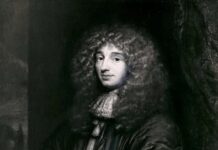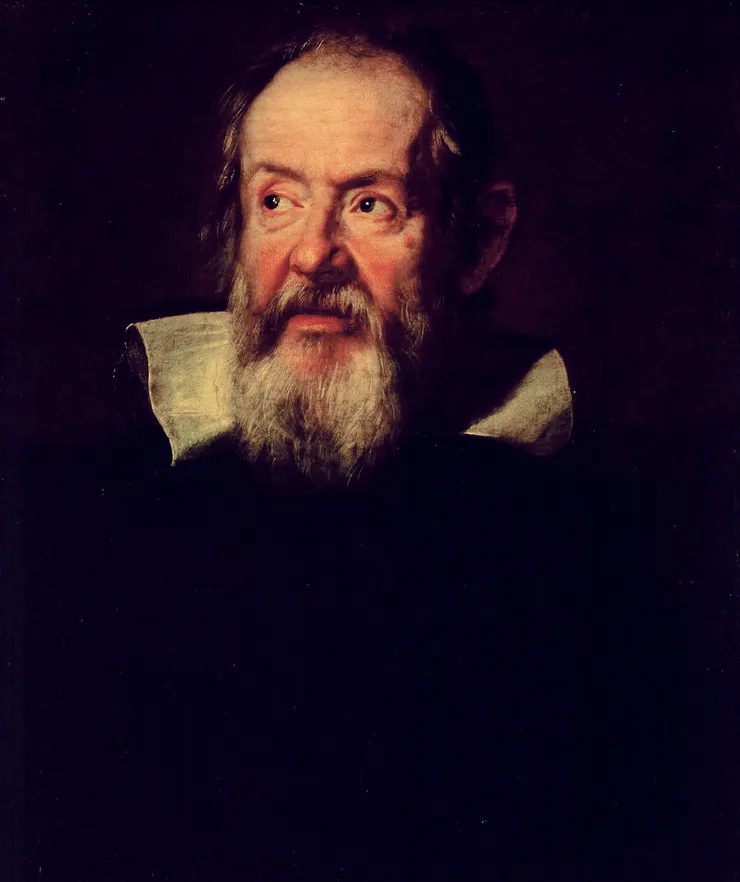
Galileo changed the way we see the universe. He was born in Pisa on February 15, 1564, the son of a musician. He initially studied medicine. Then he turned to mathematics. This change defines his legacy.
His early fame came from an invention around 1586. He created a hydrostatic balance. This made it possible to accurately measure the density. In 1589, he published a paper on the center of gravity in solids. This study gave him the opportunity to lecture at the University of Pisa.
So he challenged Aristotle. Ancient philosophers argued that heavier objects fall faster than lighter ones. Galileo denied this. He proposed the uniform acceleration of falling objects. He also showed that a projectile follows a parabolic path. It’s not just math. This is a fundamental change in our understanding of movement.
A glimpse of the universe
In 1609 he did something no one had ever done before. He pointed his telescope at the sky. The results were immediate and shocking.
The moon is not a perfect sphere. Its surface is irregular. Craters and mountains break its smoothness. This is contrary to the idea of heavenly perfection.
He looked at the Milky Way. This is not cloudy haze. It is made up of countless individual stars. The universe is much bigger and more crowded than anyone imagined.
Then he looked at Jupiter. He saw satellites orbiting it. These satellites were later named Galilean satellites. The Earth is not the center of all movement. Jupiter has its own system. This is a major blow to the geocentric models.
Conflict with the church
These discoveries led to his appointment as a philosopher and mathematician by the Grand Duke of Tuscany. He gained status. But he also made enemies.
While visiting Rome in 1611, he promoted the Copernican system. This model places the sun in the center. Aristotle’s professors hated it. The church agreed with them. In 1616, Copernicanism was declared false and erroneous.
Galileo was once again allowed to write on the subject. The problem is that he needs to discuss this without commitment. He could not claim it was true. He could only offer it as a hypothesis.
He wrote Dialogue Concerning the Two Chief World Systems in 1632. This book is a masterpiece of scientific writing. It was also a death sentence for his freedom.
The Jesuits were furious. The Inquisition put him on trial. He was convicted of heresy. He was forced to recant his beliefs.
House arrest and Final Years
He spent the rest of his life under house arrest. He lived in Arcetri near Florence. He continued his research. He kept writing.
In 1637 he became blind. The darkness did not stop his work. He died on 8 January 1642.
His legacy extends beyond his discoveries. Here’s how he does it. He used observation to challenge authority. He trusted what he saw. He didn’t believe what he was told.
This approach defines modern science. We still use his principles. We’re still looking. We still question. We still measure.
The universe is not what it seems. It is complex.