You think you know what the brain is? Think again. Michael Pollan returns to the fray with A World Appears, taking on consciousness itself. Not that he solved it. Five years in, he admits the opposite. The more he chased sentience, emotion, self, the more he realized how much he didn’t know. Discursive? Yes. Abstruse? Sometimes. Good? Absolutely. He writes like a human who respects the mystery instead of trying to pin it down like a butterfly. 🦋
We need better minds for this century. The 21st Century brain isn’t coming naturally; it has to be forged. Hannah Critchlow, a neuroscientist with a pulse on the future, says we already have the hardware. Imagination. Flexibility. Creativity. But we’re lazy about maintaining it. She argues for mobility—not just walking, but moving between social circles, trying new foods, absorbing different ideas. Rigidity is the enemy here.
Physics feels too heavy? Sarah Alam Malik shrinks the cosmos into a readable bite in A Brief History of the Universe. Particle physics, quantum weirdness, the fate of life—it’s all in under 250 pages. It moves fast. Maybe too fast? A little. But if you want a thrill ride through cosmology without drowning in math, this is your ticket.
Climate anxiety is real. Fred Pearce has spent four decades reporting the bad news, mostly for New Scientist. Yet Despite It All lands on something radical: cautious hope. Not delusional optimism, but a bet on nature’s ability to regrow and our capacity to change. We can rediscover old wisdom. We can imagine the best case, then do the work. Pearce is betting we’ll survive the Anthropocene. He’s old enough to know he might not collect the winnings, though. That’s fair. 🍃
Art heals. Not as a metaphor, but as biology. Art Cure by Daisy Fancourt dissects why theater or magic or music does what it does to our bodies and brains. Professor Fancourt doesn’t deal in woo-woo. She deals in epidemiology, psychobiology, data. The New Scientist Book Club loved it, which usually means you should read it.
Fatherhood is more than just buying the baby shoes. Dad Brain reveals that testosterone drops, postpartum depression exists, and trauma is real for men too. Darby Saxbe tracked the largest longitudinal study on male fathers in the world. The result? Fatherhood is learned and innate. Involving yourself in the rearing process makes you happier. Shocking? Perhaps. But true.
Quantum physics as autobiography? Entangled States by Karmela Padavic-Why does physics comfort them when identity frays? They write that it reconciles the paths not taken, the identities that feel scattered. Born in Croatia, educated in New York, a physics PhD—it’s a life lived through the lens of particles and probabilities. Wonder is the baseline.
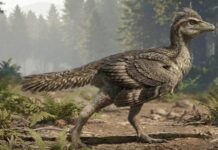
Birds are dinosaurs. We know this, but do we feel it? The Story of Birds by Steve Brusatte hammers this home with delight. The asteroid missed some dinosaurs 66 million years ago. They evolved into the feathered things in your yard. Better yet: Zealandia holds fossils of dinosaurs that lasted until Māori settlers arrived. We missed the boat. Or we didn’t. 🦖
Don’t take this next one lightly. The Edge of Space-Time mixes dark matter with black feminist theory and poetry. Chanda Prescod-Weinstein refuses to keep her research separate from her worldview. It’s wild. It’s genre-defying. It will probably annoy physicists who want clean equations, but it’ll blow your mind anyway.
Are you older than your birth certificate? The Age Code suggests you might be 36 when you’re actually 34. Health journalist David Cox tried every diet trick in the book to fix it. Turns out, food is the master switch for aging. He visits labs, gets tested, and eventually finds a path that slows the clock. The ending is happy, for now.
Life is not a solo sport. Togetherness argues that symbiosis is the rule, not the exception. Rowan Hooper, New Scientist’s podcast editor, sees cooperation from gut microbes to coral reefs to global systems. If you want to understand climate change, evolution, or even why your mood swings, look at the microbes. They are driving the car. 🚗
You are becoming a robot. We Are Not Machines by Sarah O’Connor doesn’t mince words. AI isn’t just stealing jobs; it’s forcing us to become the machine to keep them. Deskilled. Uncreative. She argues the solution requires serious worker pushback. We aren’t code, and we shouldn’t treat ourselves like it.
Your hormones are controlling you right now. Signals by Saira Hameed explains why. Hunger. Thirst. Stress. Sleep. It’s all chemical signaling. We tend to vilify hormones, especially in women, but Hameed—a real endocrinologist—shows they run everything. She backs the science with patient stories, making the invisible biology visible.
War is now automated. Project Maven is not fiction. It started in 2017 as a way to help humans process drone footage. The goal shifted fast. Now it hunts targets. Now it chooses who gets hit. It’s used by NATO. It’s used at borders. The future is here, and it’s terrifying. 🤖
Flowers changed everything. How Flowers Made Our World reminds us that without them, rainforests wouldn’t exist. Neither would bees. Neither would we, arguably. David George Haskell, a biologist with a poet’s heart, details how flowering plants transformed ecosystems late in the dinosaur era. They are world-changers, plain and simple. 🌸
Radio waves hit the moon first. Neil Armstrong’s foot came later. Radio Universe by Emma Chapman celebrates the silent, invisible messengers of astrophysics. They travel further than light. They work at night. They might help us find aliens. We owe a debt to the hum that doesn’t stop.
Finally, The Secrets of Our DNA. Turi King brings her expertise in genetics to forensics. King Richard III? Found in a car park, identified by DNA. Amanda Knox? Cleared. It’s a story about how a tiny strand of code can rewrite history and free the innocent. Or condemn the guilty.
“Without understanding symbiosis, we can’t understand evolution.” — Rowan Hooper
There you have it. Seventeen ways to change how you see the world this year. Some are easy. Some will hurt.
The point isn’t to finish the list. The point is to pick the one that haunts you.
What happens after you finish that chapter?