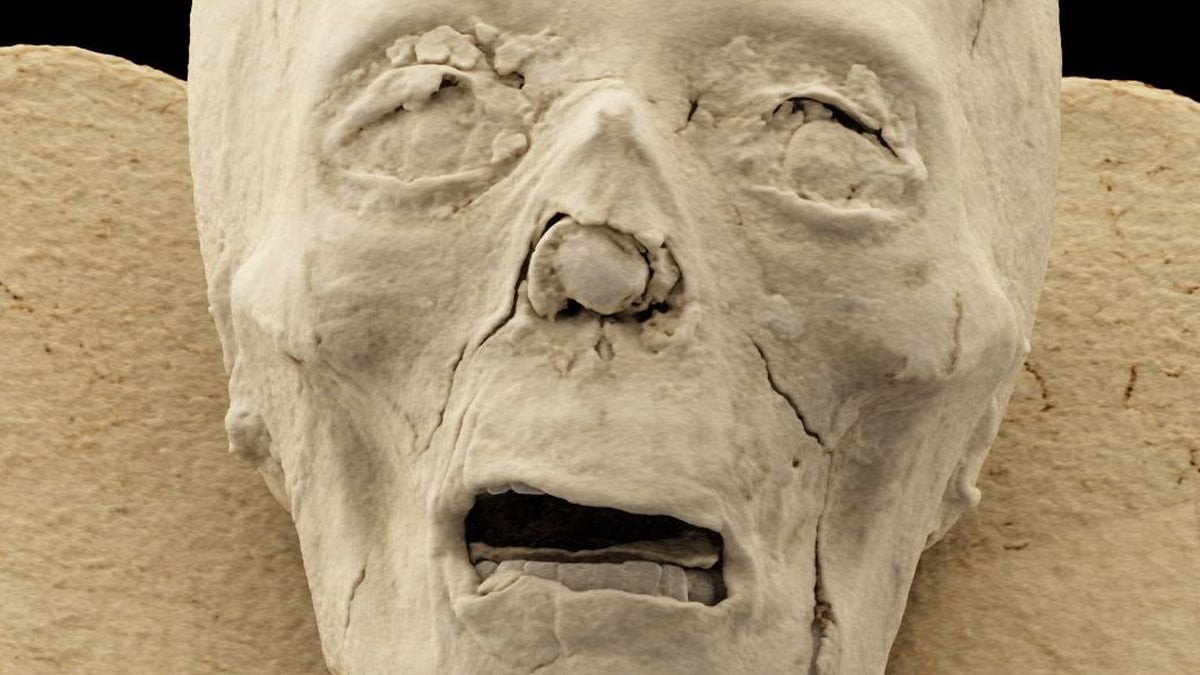
For decades, studying the remains of ancient Egyptians was a delicate, often destructive process. To understand what lay beneath the linen wrappings, researchers frequently had to physically disturb or unwrap the bodies, risking the integrity of the artifacts. Today, that era of guesswork is ending.
By applying hospital-grade imaging technology to ancient remains, scientists are now able to peer inside mummies with unprecedented clarity, observing their internal structures without disturbing a single thread of ancient fabric.
The Power of Non-Invasive Imaging
The centerpiece of this research is Computed Tomography (CT) scanning. While widely known for its role in modern medicine, CT technology serves a vital purpose in archaeology. It uses rotating X-ray machines and advanced computer processing to construct highly detailed 2D or 3D images of an object’s interior.
At the Semmelweis Museum of Medical History in Budapest, researchers are pushing the boundaries of this technology. Using a state-of-the-art scanner equipped with a photon-counting detector, a team led by radiologist Ibolyka Dudás is conducting deep-dive examinations of the museum’s Egyptian collection.
“The aim of the examinations is to obtain as accurate a picture as possible of the internal structure of the remains, any abnormalities, and the preservation techniques used,” says Ibolyka Dudás.
This non-destructive approach is part of a broader scientific trend. Similar high-resolution scans have already been used to study everything from delicate insect brains to Martian meteorites, proving that tools designed for the living are among our best windows into the dead.
Solving Mysteries and Identifying Health Trends
The current project at the Semmelweis Museum aims to provide more detail than any previous study of these specific remains. While some mummies in the collection have been carbon-dated—with some appearing to date back to between 401 and 259 BCE—the scans offer a different kind of “dating” through the analysis of embalming techniques.
The preliminary findings are already yielding surprising results:
- Anatomy Surprises: One mysterious bundle, previously thought to be either a bird or a human head, was revealed by the CT scan to be a human foot.
- Ancient Pathologies: A scan of a different mummified foot suggests the individual suffered from osteoporosis, providing a direct look at ancient bone health.
- Hidden Artifacts: In similar studies globally, CT scans have uncovered “hidden” items tucked into wrappings by ancient embalmers, such as coins and protective amulets.
Why This Matters for History
This technological leap does more than just identify body parts; it provides a biological record of ancient life. By analyzing the internal remains, researchers can track the spread of diseases, such as anemia in children or arthritis in adults, and even identify ancient cancers.
The ability to perform these investigations non-invasively means that we can extract maximum data from precious historical specimens without compromising their physical preservation for future generations.
Conclusion
The integration of advanced medical imaging into archaeology is transforming our understanding of antiquity. By turning CT scanners into “time machines,” scientists can reconstruct the health, rituals, and lives of ancient civilizations while keeping their physical remains perfectly intact.