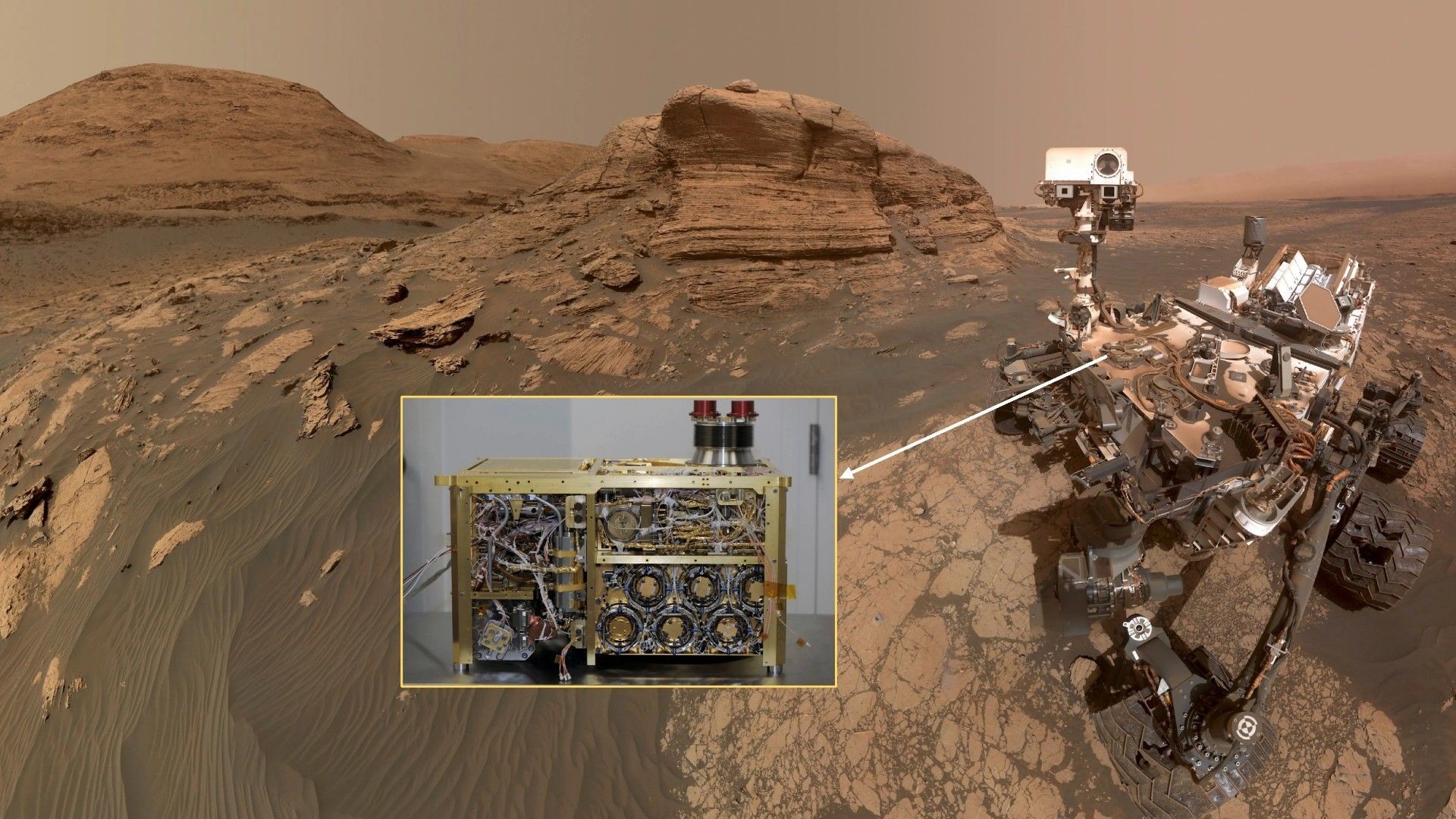
NASA’s Curiosity rover has achieved a scientific first by detecting a diverse array of organic molecules in the Martian soil. Using a groundbreaking chemical experiment, the rover has identified complex carbon-based compounds—the fundamental building blocks of life—preserved within ancient sedimentary rocks in the Gale crater.
A Scientific First: The TMAH Experiment
For the first time in planetary exploration, scientists have successfully utilized a chemical reagent called tetramethylammonium hydroxide (TMAH) on another world. This experiment was conducted using Curiosity’s Sample Analysis at Mars (SAM) instrument suite.
The goal of using TMAH was to break down complex, large-scale organic matter into smaller, detectable pieces. The results were highly successful:
– The rover detected more than 20 different organic molecules.
– These molecules include those containing nitrogen and sulfur, similar to the chemical precursors that fueled the origin of life on Earth.
– The findings suggest that complex “macromolecular” carbon has been preserved deep within the Martian subsurface for billions of years.
The Mystery of Origin: Life or Geology?
While the discovery of these organic molecules is a massive leap forward, it does not provide a “smoking gun” for extraterrestrial life. Scientists are currently faced with a critical question: Where did these molecules come from?
The research, led by Amy Williams of the University of Florida and published in Nature Communications, highlights two main possibilities:
1. Endogenous sources: The molecules were produced on Mars, either through biological processes (ancient life) or non-biological geological processes (abiotic chemistry).
2. Exogenous sources: The molecules arrived on Mars from elsewhere, such as via meteorites, comets, or interplanetary dust.
The fact that these molecules have survived for roughly 3.5 billion years —despite the harsh Martian radiation and the intense process of turning sediment into rock (diagenesis)—is one of the most surprising aspects of the find. It suggests that Mars is much better at preserving organic history than previously thought.
Connecting the Dots Across Mars
Curiosity’s findings do not exist in isolation. The discovery aligns with recent data from NASA’s Perseverance rover, which has also detected cyclic organic compounds and macromolecular carbon in different regions of the planet.
“We now have evidence for diverse and potentially complex organic matter, preserved in different locations on Mars… This suggests that organic carbon is better preserved over long time periods on Mars than we expected,” says Amy Williams.
Why This Matters for Future Exploration
This experiment serves as a “trailblazer” for the next generation of space exploration. By proving that TMAH can successfully liberate organic material from Martian rocks, NASA and other agencies now have a blueprint for future missions.
The success of this method will directly influence upcoming high-stakes missions, including:
– The ESA’s Rosalind Franklin rover, which will use similar technology to explore the Oxia Planum plain on Mars.
– The Dragonfly rotorcraft, which is destined to explore the organic-rich environment of Saturn’s moon, Titan.
As robotic and human exploration moves forward, the focus will shift from simply finding organic carbon to identifying its exact origin: whether it is a relic of ancient Martian biology or a gift from the cosmos.
Conclusion: The detection of complex organic molecules by Curiosity confirms that Mars possesses the chemical ingredients necessary for life, providing a vital roadmap for future missions seeking to answer whether we are alone in the solar system.