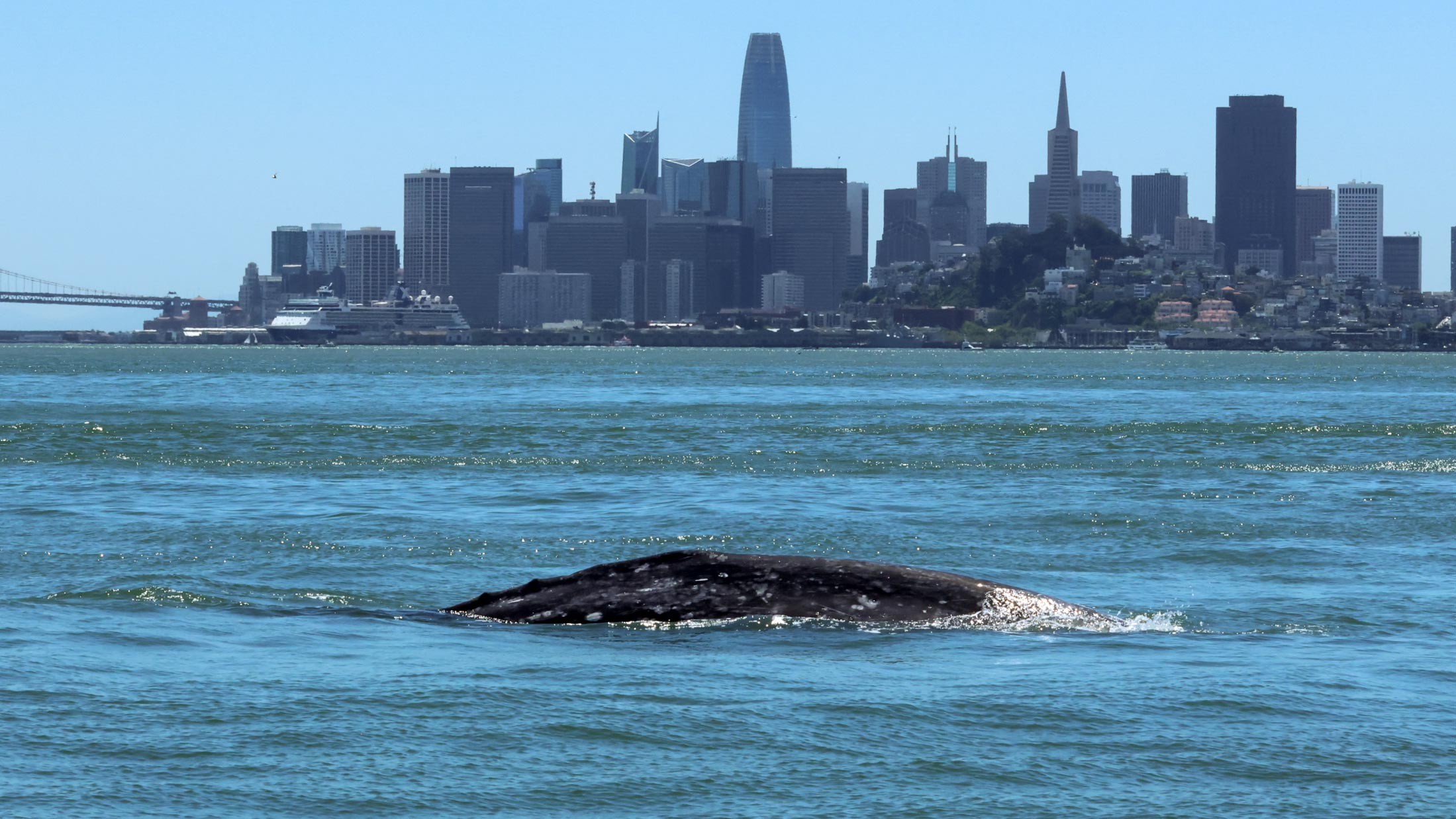
Recent scientific findings reveal a troubling trend in the Pacific: San Francisco Bay, once an unlikely destination for migrating gray whales, has become a high-risk zone where nearly 20% of visiting whales eventually die.
A study published in Frontiers in Marine Science suggests that these whales are not visiting the Bay by choice, but out of necessity. Driven by shifting ocean ecosystems, many are seeking emergency food sources in these waters—only to encounter a lethal combination of heavy maritime traffic and malnutrition.
The “Emergency Stop” Phenomenon
Historically, gray whales follow a predictable migration route from Arctic feeding grounds to the warm lagoons of Baja Mexico. However, climate change is disrupting the Arctic food supplies that these whales rely on to build energy reserves.
As their primary feeding grounds become less reliable, the whales are forced to adapt in real-time. This has led to the emergence of “Bay Grays”—whales that deviate from their traditional routes to feed in the San Francisco Bay. Researchers believe the Bay acts as an emergency refuge for whales in poor physical condition, but this refuge comes at a devastating cost.
Why the Mortality Rate is So High
The study, which tracked 114 individual whales between 2018 and 2025, highlights two primary killers:
- Vessel Strikes: San Francisco Bay is a massive maritime hub. The Golden Gate Strait acts as a “bottleneck” where all ship traffic must pass. Because gray whales have a low profile when surfacing, they are incredibly difficult for vessel operators to spot, especially in the Bay’s frequent fog.
- Starvation: Many whales entering the Bay show signs of extreme malnutrition. There is a growing concern among scientists that weakened, starving whales may lack the energy or cognitive function required to effectively avoid large ships, creating a deadly cycle of vulnerability.
“In San Francisco Bay, the biggest threat to these whales is vessel traffic,” notes Bekah Lane of the Center for Coastal Studies.
Data Trends and Population Decline
The scale of the crisis is reflected in the broader population statistics provided by the National Oceanic and Atmospheric Administration (NOAA):
– Population Drop: Gray whale numbers have plummeted by more than 50% since 2016.
– Reproductive Issues: Sightings of calves have become increasingly rare, signaling a potential long-term collapse in population growth.
– Low Site Fidelity: Out of the 114 whales recorded in the Bay, only four were seen in more than one year. This suggests that most whales do not “return” to the Bay; rather, they enter, struggle to survive, and often perish.
Potential Solutions for Conservation
While the data is sobering, it provides a roadmap for potential intervention. To mitigate these risks, researchers suggest that local authorities and maritime industries consider:
– Speed Restrictions: Reducing vessel speeds can significantly decrease the impact and likelihood of fatal strikes.
– Route Adjustments: Re-evaluating ferry routes and commercial shipping lanes to avoid known whale aggregation areas.
– Enhanced Education: Training commercial operators to recognize the signs of whale presence in high-traffic zones.
Conclusion
The presence of gray whales in San Francisco Bay is a visible symptom of a much larger ecological crisis driven by climate change. Without targeted measures to reduce vessel strikes and address the underlying starvation of the species, this “emergency refuge” may continue to function as a fatal trap.