3,001 bones.
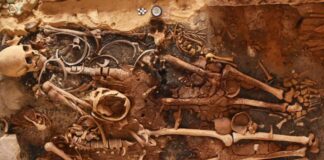
That’s the raw number pulled from the dirt near Hanson Ranch Station, Wyoming, over two decades. From 1997 to 2017. They sit there. Quietly. Waiting to be read.
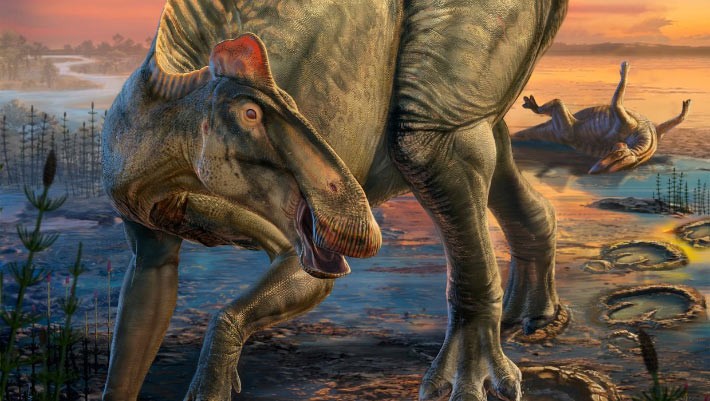
Most of them? Belonging to Edmontosaurus annectens. Duck-billed dinosaurs. Giant, plant-munching things that lived right at the end of the Cretaceous.
But here’s the thing about old bones. People assume holes mean teeth. Wrong.
Bethania Siviero at Loma Linda University knows this pain. She and her team got tired of seeing “tooth marks” slapped on fossils when they were actually just weird natural quirks.
“Mistaken identification has led to misleading interpretations.”
Simple enough, right? It is not.
Out of that massive pile, only thirteen bones had anything resembling bite marks. Thirteen.
They ran CT scans. Peered closely.
One was a natural feature. Just anatomy. Not violence.
Twelve remained. Real traces.
Some matched known patterns, like Knethichnus parallelum. Some matched Linichnus serratus. When they compared the spacing of the damage to the teeth of local predators, only one predator fit the profile.
Tyrannosaurus rex.
But wait.
Did T-rex hunt them? Kill them fresh and tear into the meat?
Probably not.
The bones show no healing. The animals were likely dead. Or dying. T-rex didn’t chase these giants down in a blockbuster movie scene. It found the leftovers. It scavenged.
Think about that for a second. The most famous carnivore in history. Reduced to picking through trash.
The study updates the rulebook, too. Stop calling every depression a tooth mark.
“Not all of these features are tooth marks.”
The findings went live in PLoS ONE today. Siviero et al., 2026.
So. Scavengers. Not hunters. Or maybe both, depending on what the wind brought. The bones don’t lie, but they don’t scream either.
Correctly identifying bone depressions is important because not all of this stuff is tooth marks.
What do you think it eats when nothing is left to scavenge? 🦕