Five pairs of iron shackles. That is all it took to shift our view of a small settlement in the French Loire Valley. They are two thousand three hundred years old, cold, and extremely rare. Found in Allonnes back in 2019. Announced recently.
It changes everything we thought we knew about this specific pocket of Gaul.
The site dates to the third century BC. Not just a hamlet, it was a place of trade and worship. Archaeologists from INRAP (the French National Institute for Preventive Archaeology) have spent two years digging. What came up suggests the area was frequented by two groups of people we do not usually romanticize.
Metalsmiths.
And slave traders.
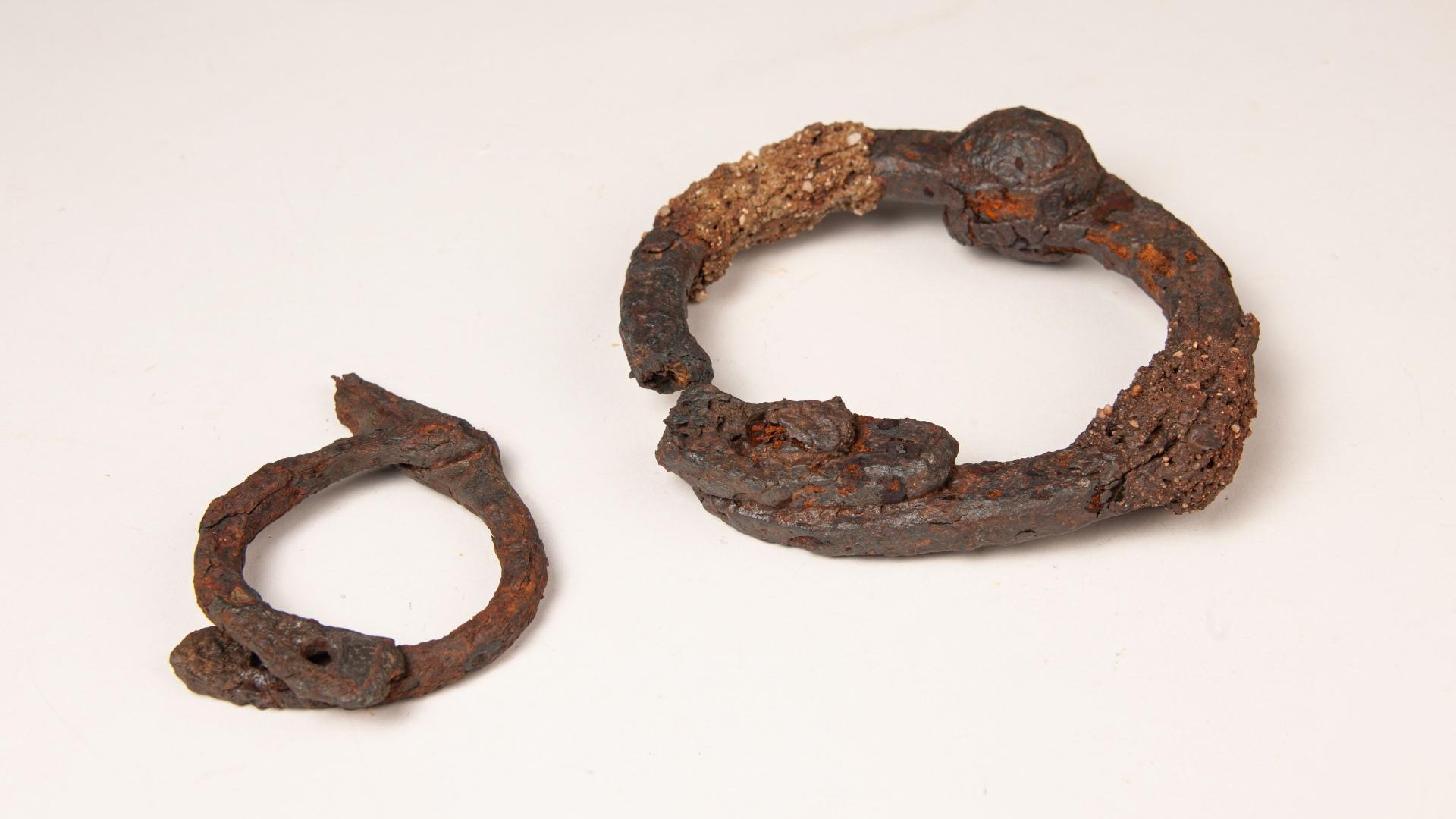
Workshops for blacksmiths, bronze workers, and sheet-metal experts were found there. Standard for a tribal hub. So were high-quality swords, spearheads, horse harnesses, and keys. Rich items. Weapons. Then came the shackles. A double-wrist restraint. An ankle cuff. Three other broken pieces of metal designed to restrict movement.
Surprise is too weak a word for how odd these finds are. You do not find handcuffs every day. Especially not from this era.
Their presence implies Allonnes was a node in the Late Iron Age slave trade (roughly 450 to 50 BC). It points to a rigid hierarchy. Dominants and subordinates.
“The identification of restraints and weapons suggests… dominant and subordinate groups.”
Thierry Lejars, an expert on Celtic metalwork, puts it plainly. Prisoners or slaves. The Gauls—a loose collection of Celtic tribes—enslaved prisoners of war. Also convicts. Also debtors. They lost their rights. Their freedom. They were property, bought and sold to work the fields.
We do not know much about pre-Roman Celtic slavery. They left few records. Mostly myths or interpretations by Romans who hated them. But these shackles give voice to the invisible.
Look at the size.
The wrist restraint measures just 6 centimeters in diameter. Two and four-tenths inches. That fits a woman. Or a child. It is small enough to break bone if you pull. The ankle restraint weighed over a kilogram. More than two pounds of dead iron dragging around the ankle for every step taken. Imagine carrying that all day. In the mud. In the fields.
It was also a sacred site.
Nearby stood a religious sanctuary. Offerings of rings, amulets, and clothing lay buried. But they were damaged on purpose. Deformed. Mutilated.
Why destroy your jewelry?
To transform it. A mundane possession becomes a gift to the gods once you ruin it. Isabelle Bollard-Raineau, a coin expert from the culture ministry, explains the logic.
Hundreds of coins were found too. They spanned five centuries. Some third of them were filed or chiseled. Sheared apart.
“Removal of the coin’s commercial function… to dedicate the object to the sacred.”
The money loses its value. It gains spiritual weight. A permanent offering.
Allonnes sat at the crossroads of ancient roads. Traffic passed through. People. Goods. Ideas. And slaves. The metal finds reveal the lives of those at the very bottom of the social ladder. The powerless.
It is heavy stuff. Heavy iron, heavy history. We like to think of ancient Gaul as a place of druidic wisdom and tribal bravery. This reminds us that hierarchy was brutal everywhere.
The shackles do not speak. They only bind.