Hot rock do not stay in place.
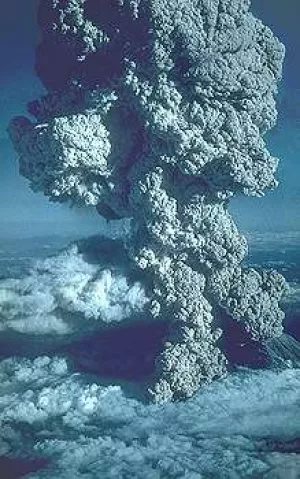
When material deep within the Earth gets hot enough to melt, it becomes lighter than the cooler, solid rock that surrounds it. Physics takes over. Buoyancy forces this molten material upward. It travels through the Earth’s crust, waiting in pockets called magma chamberss and eventually reaching the surface.
We call this whole cycle volcanism.
It’s not just an explosion. When the magma reaches the outside world, it releases solid debris and gases. Look at the ground beneath your feet. In fact, most of the Earth’s surface is made of solid volcanic rock. The iconic cones that we associate with volcanoes are just the most visible manifestation of a planet that is constantly recycling itself.
But this heat also has a quiet side.
The hidden power of geothermal energy
Lava flows make for dramatic documentaries, but their real use is in geothermal energy (geothermal energy).
This does not use magma directly. That would be catastrophic. Instead, engineers and scientists are targeting the heat stored in the Earth’s upper layers. Heat naturally flows from the core to the crust. You can intercept this flow.
This is why it is important in everyday life:
- Direct Heating: In parts of Iceland or California, underground hot water is piped directly into your home. There is no fuel to burn. No smoke. It’s just thermal energy extracted from the earth’s internal furnace.
- Power Generation: Where heat is strong and readily available, steam drives turbines. This provides baseline power that is not dependent on wind or sunlight. It works 24/7.
- Industrial Processes: Factories use geothermal heat to dry produce, heat greenhouses, and even process certain chemicals.
Why the Earth’s crust matters
The thickness of the lithosphere (the Earth’s hard outer crust) is not infinite. It may break in places. These are plate boundaries. Magma finds these weaknesses. It rises faster here. This is why volcanoes cluster together along specific lines, such as the “Ring of Fire” around the Pacific Ocean.
However, not all volcanism causes explosions. Some of the magma is thick and sticky. It blocks the vents. The pressure builds until the ground shakes. Sometimes magma is liquid. It spills out calmly and give birth to new lands. Hawaii is basically a mountain that grew out of the ocean due to the slow and steady filling and emptying of the magma chambers beneath the island.
The Human Connection
We often think of volcanoes as disasters. And they can be. But the process of releasing volcanic ash into the atmosphere also creates fertile soil. Volcanic rocks are broken down into Minerals that plants like. This is why regions with active or recent volcanism tend to have some of the most productive agricultural land on Earth.
In addition, the heat we use is renewable. Yes, the Earth’s core is cooling, but at a rate so slow that it would inexhaustible on human timescales. It’s constant.
The problem is not just how the rock melts. It’s how we live on top of it. We build cities on dormant vents. We drill in the hot rock to get electricity. We watch the cone rise, knowing that the ground was never solid. Just waiting.
“
The heat inside the earth is more than just a geological curiosity. It is a huge untapped energy treasure trove. When these reserves are compared to dwindling fossil fuel reserves, the difference is striking. Fossil fuels are limited. In principle, geothermal energy can be used continuously or not.
But for most of human history, we’ve buried it. It wasn’t until the beginning of the 20th century that we figured out how to use it. A breakthrough occurred in 1904.
Larderello’s first geothermal power plant
In the same year, the first geothermal power plant started operating in Larderello, Italy. But it proved that the Earth’s internal heat can be converted into usable electricity. The technology was crude by today’s standards. The efficiency was low. But it worked.
Since then, the way in which geothermal energy is utilized has changed dramatically. We have moved from simple direct heating to complex binary power plants that can draw electricity from cooler sources. The goal remains the same. Extract heat. Generate power. Minimize waste.
Why geothermal energy matters now
Why is this important today? Because the fossil fuel window is closing. The environmental costs of burning coal, oil and gas are no longer an abstract concept. This is a crisis. Geothermal offers a clean alternative. It doesn’t emit greenhouse gases during operation. It’s a baseload power source, which means it can run 24/7, unlike solar and wind, which depend on the weather.
However, it is not without its challenges. Requires special geological conditions. You need heat close to the surface. Not all areas are suitable for it. That’s why location is important. Places like Iceland, Kenya, and parts of the western United States have natural advantages. Some have to dig deeper, spend more money and take more risks.
Transition to widespread use
Despite the obstacles, the momentum is changing. Countries that are heavily dependent on imports are looking inward. They see geothermal as a way to achieve energy independence. It’s not just about saving the planet. It’s about safety. Stability.
Technology is constantly developing. Enhanced Geothermal Systems (EGS) promise to unlock heat in areas that lack natural hydrothermal resources. This is considered to be still in the early stages of the revolution in the use of geothermal energy. But its foundation was created more than a hundred years ago in Larderello. The heat is still there. Awaiting use.
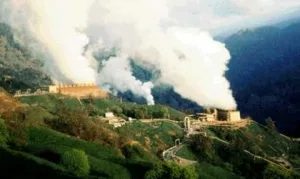
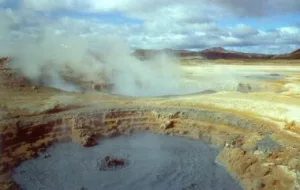
The real energy gold mine is not in solid rock. They are hidden in areas of the Earth’s crust with temperatures similar to blast furnaces. The water here is not just hot. It produces superheated steam. This pressurized steam is forced to the surface through hot springs and geysers. We have observed these natural geysers for centuries. We rarely thought to plug them in.
Things have changed in California. Engineers harnessed natural steam fields to generate enough electricity to power half of San Francisco. This is a direct connection between underground heat and city lights. There is no coal. There is no gas. Just hot rocks and water.
But relying on nature’s lucky breaks limits expansion. Most places don’t have geysers in backyards. What if you want geothermal energy without natural steam?
Generating steam by design
Technicians have figured out how to build plants in hot rock formations near the earth’s surface. The method is brutal in its simplicity. Two wells are needed.
First, a hole is drilled into the heated rock. Next, cold water is sprayed at high pressure. The water hits the hot stone. It flash-boils instantly. The produced steam rises through the second borehole. It escapes to the surface. There, it spins turbines. These turbines generate electricity.
“Wasserdampf lässt sich dann dadurch erzeugen, indem man durch ein Bohrloch Wasser in das Gestein einpresst” – German Geological Survey
This process works wherever there is suitable geology. It doesn’t matter if there is natural convection or not. You create the convection. You force the heat transfer. This system is closed, efficient and scalable.
In addition to electricity: direct heating
Not all geothermal energy is grid-friendly. In many countries, the extracted liquid is too hot to convert directly into electricity. Or the temperature may be too low for the turbine. High temperatures can damage the device. At low temperatures, there is not enough pressure to operate the turbine efficiently.
So, we don’t throw the heat away. we use it directly.
This “waste heat” is the main source of energy for heating. Residential buildings draw on these reservoirs. Greenhouses use the steady warmth to grow crops. This is a low-tech application, but very effective. Avoid the inefficiency of converting thermal energy into electricity. It goes straight from ground to radiator.
The difference is important. We tend to think of energy as one thing: electricity. But geothermal shows that it is a spectrum. Sometimes you need the spark of a turbine. Sometimes you just need a warm floor.
Both approaches rely on the same truth. The inside of the earth is a battery. It’s always on. You have to figure out how to draw a line.