Four and a half thousand years. Dozens of earthquakes. Not much damage.
New research says the Khufu Pyramid survives because it refuses to vibrate at the same rate as the ground beneath it.
Led by Egypt’s National Research Institute, the study provides numbers to back up an old hunch about durability. The pyramid has natural vibration frequencies that are totally different from the surrounding soil. That mismatch stops destructive resonance from setting in during a quake. It’s basically an accidental form of noise canceling.
The Specs
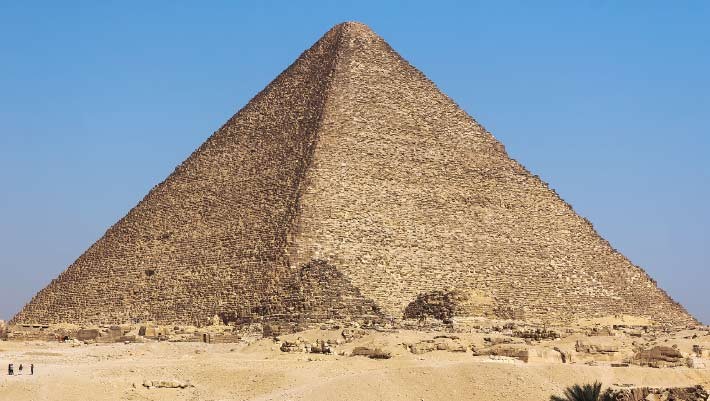
Built by Pharaoh Khufu around 2600 B.C., it took roughly 26 years. The oldest of the Seven Wonders. It held the title of world’s tallest man-made structure for 3,880 years. Until 1311, that is. Then Lincoln Cathedral in England topped it.
The original height? 146.6 meters. The smooth limestone casing made it look brand new. Now it stands at 137 meters. The casing is gone, worn away by centuries and scavenging.
But the skeleton holds up.
It survived a 6.8 magnitude tremor in 1847. It shrugged off a 5.8 in 1992. Externally? Fine. Internally? Still standing. Yet for ages, there wasn’t much hard data to explain why.
“The Khufu Pyramid was the oldest constructed in the northwestern Giza plateau… consisting of a core and horizontal stone casing.”
Inside The Stone
Let’s talk scale. About 2.3 million blocks. Each one placed to build a slope of 51 degrees. A base side length of roughly 230 meters.
The interior isn’t just empty space. Dr. Asem Salama, senior author of the study, outlines the anatomy. Eight main parts. The main entrance and its descending passage. The entrance forced by Caliph al-Mamun’s workers in the medieval period. The Subterranean Chamber down deep. The Grand Gallery, Queen’s Chamber, and King’s Chamber up high. Plus relieving chambers and ventilation shafts.
It’s intricate. Old Kingdom engineering at its peak. But how did they build it to survive? Did they know about quakes? We don’t really know.
The Physics Of It
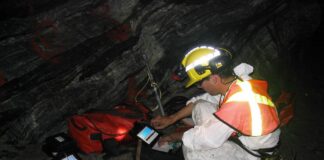
The researchers put sensors in 37 spots. King’s Chamber. Queen’s Chamber. Pressure-relieving voids. Even in the dirt next door.
The data was clear. The soil vibrated at 0.6 Hertz? The pyramid itself shook at between 2 and 2.5 Hertz? A massive gap.
Because the frequencies don’t align the energy doesn’t pile up inside the stone. It’s simple physics but it saves monuments.
They also looked at how height changes the shaking. Usually vibration gets worse the higher you go inside a building. The pyramid showed this trend. Until the top.
The pressure-relieving chambers above the King’s Chamber changed the game. Vibration dropped there. Suggesting those spaces help dissipate stress. Maybe they act like shock absorbers?
Or Just Lucky?
Here is the catch. Just because the design works doesn’t mean it was designed for this.
“Any suggestion of intentional seismic optimization remains purely speculative.”
The authors are careful to say this. They don’t believe the architects calculated seismic resistance on purpose. No direct evidence exists. Geophysical measurements alone can’t prove intent.
So maybe they just got good proportions? Maybe the mass itself was the key?
The paper dropped on May 21 in Scientific Reports. It answers the how of the survival. But the why —whether genius or happy accident—might remain buried in the limestone forever.