Look west after the sun dips. Just once more, before the dark sets in.
You’ve got a show waiting there. It unfolds over several evenings, quiet and deliberate. A young, sliver-thin moon starts its run past Venus, then aims for Jupiter. It’s a chance to watch the mechanics of our solar system in real time. You’re tracking the moon’s orbit around Earth, naked eye and all.
The lineup
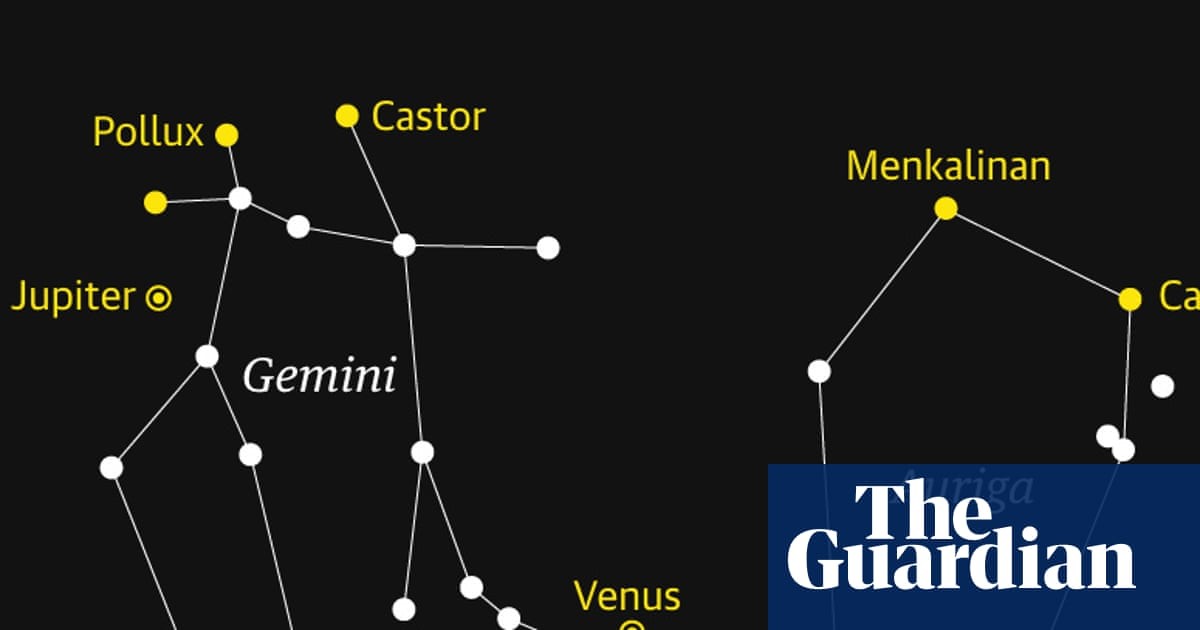
Let’s talk numbers for a second, though they don’t mean much until you see them. On May 18, from London around 10 pm, the scene is specific. The moon is only 2.4 days old. Barely 6.2% lit up. It’s just an arc of silver against the twilight fade.
Venus hangs right next to that thin light. It blazes. Bright, unmistakable, arrogant in the gloom. You won’t miss it. Jupiter is there too, though higher up and noticeably dimmer. It still commands attention, sitting above the commotion below. Then you have Gemini. Castor and Pollux, the twins, fading into the background, dimmest of the group.
The moon grows each night. Not in size, but in light.
It moves east. That’s the direction. Every night, it creeps closer to Jupiter. The illumination climbs because the angle changes relative to the sun. A geometry lesson played out in the sky.
Where to watch
Do you really need a telescope for this?
Not really. But you do need space. Clear your western horizon. No hills blocking the view. No apartment buildings cutting off the bottom of the frame. Just sky. Open, uninterrupted sky.
If you’re south of the equator, take heart. The view is better. Easier. At this time of year, the ecliptic—the path the sun, moon, and planets carve across the dome—is tilted more steeply upward from the ground. This means the whole conjunction sits higher when you first look up at sunset. No squinting through the glare. No neck strain. Just a cleaner look at the mechanics.
So look west. See how far it moves tomorrow night. Maybe tomorrow it’ll be right there, next to the big planet.