Robert Laidlow plays two games at once. He knows the cold hard math of technology, the circuits and code, but he’s also deep in the classical tradition. Not just any tradition. The serious, difficult stuff. This new album on NMC Records shows what happens when those two worlds collide.
It’s intricate. It’s wild. And somehow? It’s approachable.
Don’t let that fool you. The core concepts here are heavy. Laidlow builds structures that feel complex, maybe even intimidating at first glance, but there’s an invitation in the notes. A way in.
Warp
Let’s look at Warp. A twelve-minute piano concerto that doesn’t waste breath. It proposes a musical solution to Einstein’s gravitational field equations. Yes. Actually. Joseph Havlat steps up as the pianist and he’s not playing safe. He’s diving into distorted space-time, navigating lines where the orchestra spirals upward, stretching every string and reed to the breaking point.
The piano keeps moving. It holds its course against the chaos. By the end, the violence gives way to a strange, quiet serenity.
The recording catches it all. The BBC Philharmonic, led by Vimbayi Kaziboni, isn’t just background noise here. They are vivid. Detailed. Alive.
Gravity
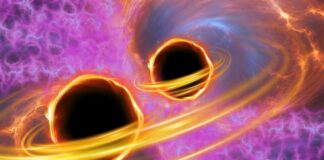
Then comes Gravity. The Piatti Quartet handles this one. It’s an homage to Newton. Universal law stuff. But Laidlow doesn’t treat it with reverence. It’s harmonically unstable. A little verbose, even. The quartet pitches itself into musical black holes, pulling at the seams of standard tuning.
Does it drag? Maybe for a minute. But the tension is the point. You’re meant to feel the weight.
Silicon
This is where things get weird. And good. Silicon is a three-movement symphony-sized piece. It’s cheeky. It tackles the big question: what does AI do to human creativity?
In Mind, the first movement, Laidlow writes music to fight a machine. Specifically, a machine told to copy his style. A mirror image that fights back.
Body brings in adaptive electronics. Teasing ones. They create diabolical musical deepfakes, blurring the line between what the orchestra played and what the algorithm generated. You start to question the source.
And then Soul. The finale. The BBC Philharthic goes up against an algorithm trained entirely on its own broadcast history. Phantom announcers crackle through the mix. The orchestra fights its own ghost.
Art imitates life, but here, art imitates a recording of itself, processed through a silicon brain that thinks it’s one of the players.
There’s no neat bow tied around the end. The music just leaves you standing there. The instruments fade. The data remains. What are you actually hearing? A performance. A simulation. Both? The algorithm is still running.