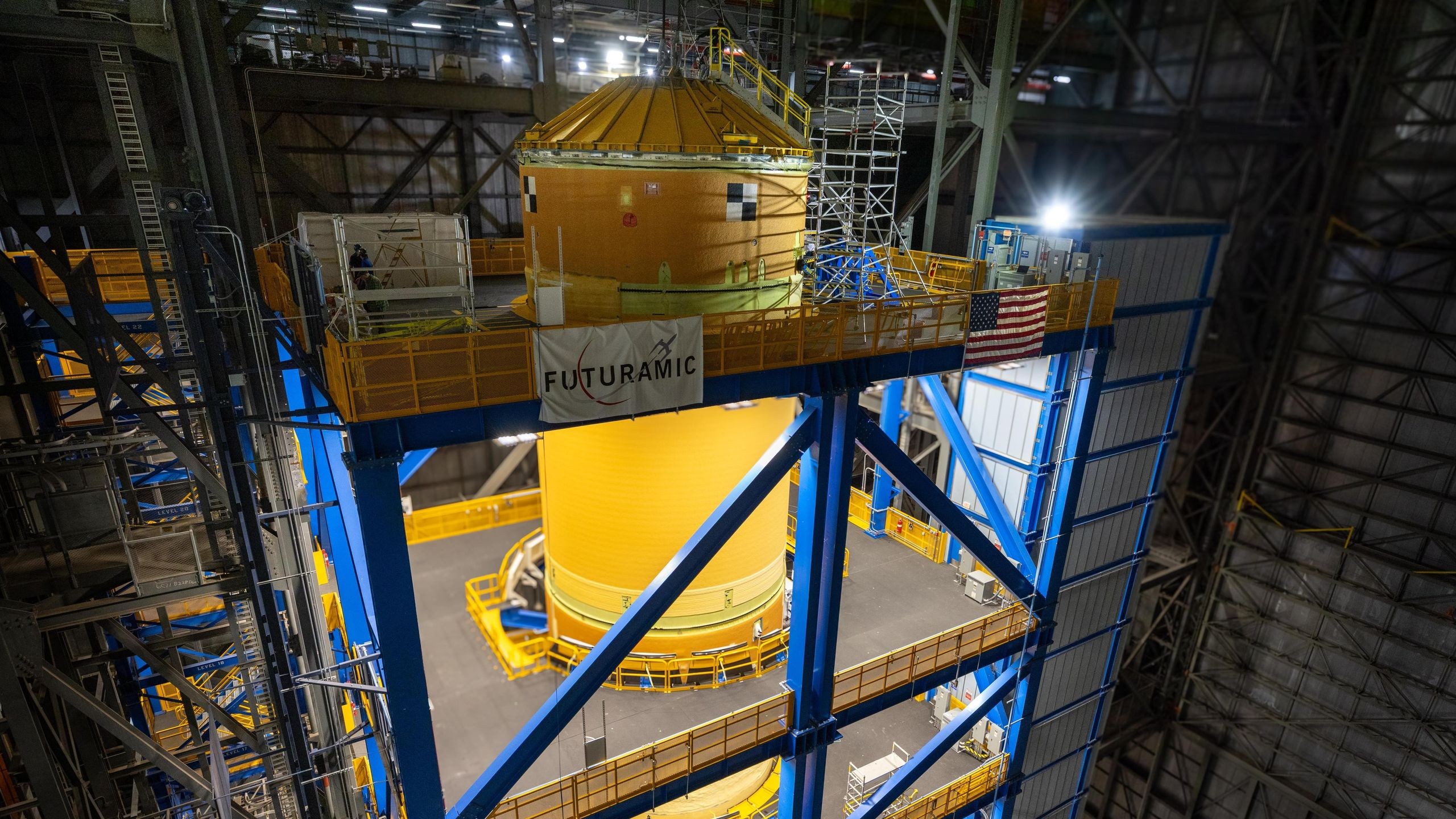
NASA has accelerated the assembly of the Space Launch System (SLS) rocket for the Artemis 3 mission, marking a significant step toward a targeted launch in late 2027. Just one month after the successful conclusion of the Artemis 2 lunar flyby, technicians at Kennedy Space Center have vertically positioned the core stage of the Artemis 3 vehicle inside the Vehicle Assembly Building (VAB). This rapid turnaround underscores the agency’s shift from testing hardware in space to preparing for complex operational maneuvers.
The Rocket Takes Shape
The core stage, which stands 212 feet (65 meters) tall, is currently situated in High Bay 2 of the VAB. This massive section houses the four RS-25 main engines that will power the rocket out of Earth’s atmosphere. Once these engines are attached, the stage will move to the taller High Bay 3 for final integration with the upper stages and the Orion spacecraft.
When fully assembled with its twin solid rocket boosters and the Orion capsule, the Artemis 3 SLS will reach a staggering height of 322 feet (98 meters) and weigh approximately 5.75 million pounds (2.6 million kilograms) when fully fueled. This heavy-lift vehicle remains the backbone of NASA’s return-to-the-moon strategy, designed to carry astronauts and critical cargo beyond low Earth orbit.
A Strategic Pivot: From Lunar Landing to Earth Orbit
Perhaps the most significant development surrounding Artemis 3 is not just the rocket itself, but a major change in mission objectives. Originally intended to be the first crewed lunar landing since 1972, Artemis 3 has been repurposed. It will now serve as a critical test flight in Earth orbit rather than a trip to the Moon.
This strategic pivot addresses delays in the development of commercial lunar landers. NASA selected two vehicles for its Human Landing System program: SpaceX’s Starship and Blue Origin’s Blue Moon. Neither has yet completed the rigorous qualification testing required to safely deliver astronauts to the lunar surface. Consequently, NASA decided to decouple the Orion spacecraft tests from the landing attempts to mitigate risk and ensure safety.
Testing the “Docking” Capability
The primary goal of Artemis 3 is to demonstrate that astronauts can safely rendezvous and dock with a lunar lander in space. During this mission, the Orion spacecraft—carrying a crew of astronauts—will launch into Earth orbit and attempt to dock with whichever lander (Starship, Blue Moon, or both) is ready at the time of launch.
Key Insight: This mission effectively turns Artemis 3 into a “dress rehearsal” for lunar landings. By practicing proximity operations and docking in Earth orbit, NASA aims to validate the complex logistics of sending humans to the Moon without the immediate pressure of a surface landing.
What This Means for the Future of Lunar Exploration
This restructuring of the Artemis program raises important questions about the timeline and architecture of lunar exploration, but it also offers a more robust path forward. By separating the testing of the Orion spacecraft from the unproven landing technologies, NASA reduces the risk of mission failure while gathering essential data.
- Artemis 3 (Late 2027): Crewed Earth-orbit test of Orion and commercial landers.
- Artemis 4 (2028): Planned as the first crewed lunar landing, currently assigned to SpaceX’s Starship.
However, the final choice of lander for Artemis 4 remains flexible. If Blue Origin’s Blue Moon completes its qualification testing ahead of schedule and demonstrates superior readiness, NASA may adjust its plans. The performance of both vehicles during the Artemis 3 Earth-orbit tests will be the deciding factor in which company earns the right to land the first astronauts on the Moon in over five decades.
In summary, the assembly of the Artemis 3 rocket signals a pragmatic shift in NASA’s lunar strategy: prioritizing safety and thorough testing in Earth orbit before committing to the high-stakes challenge of a crewed lunar landing.