The Launch
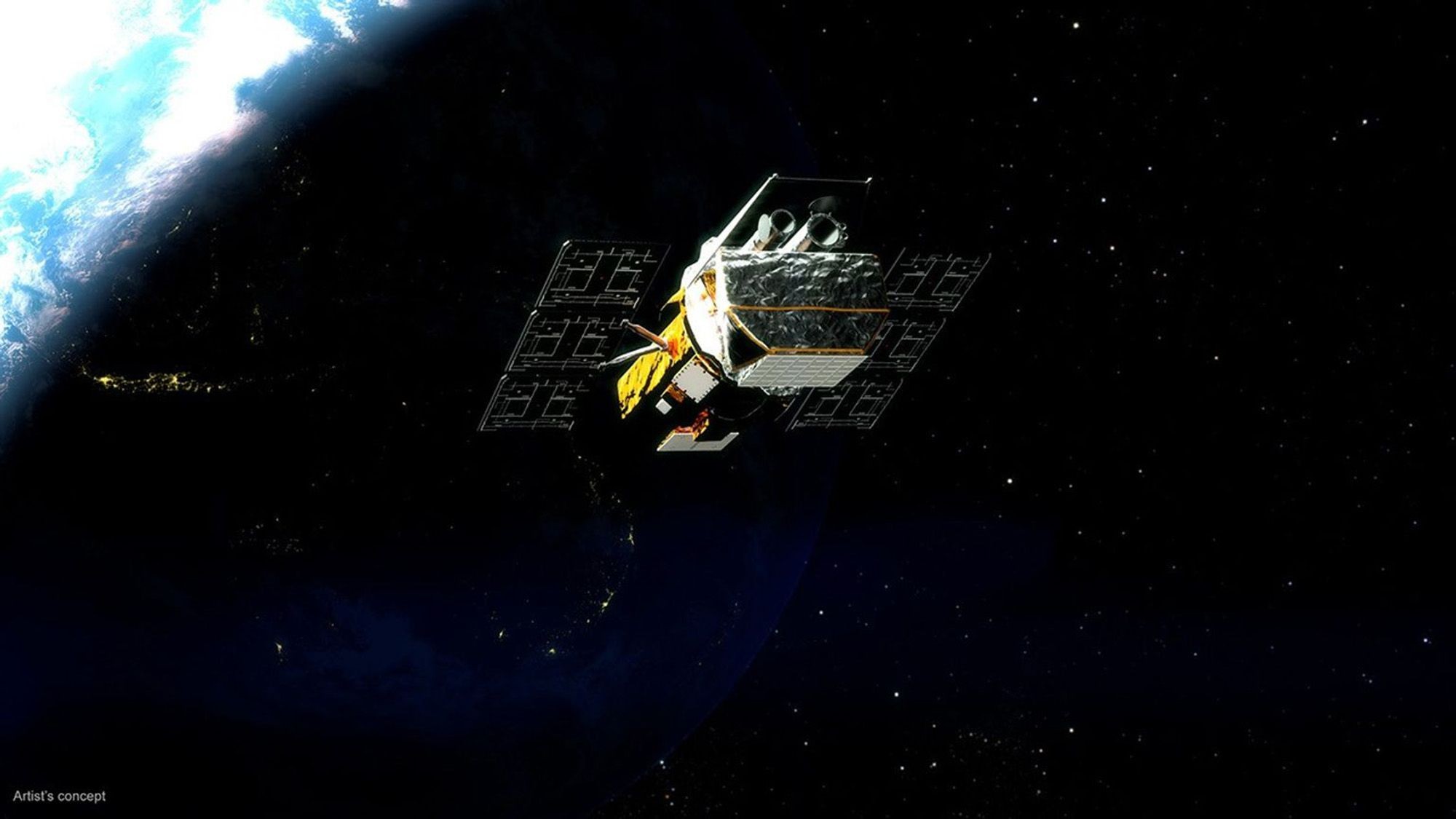
It worked. Sort of. After two delays—one for weather, one for software glitches that made everyone groan—the mission finally lifted off. Friday morning, July 3. 4:36 a.m. EDT. A modified Lockheed Martin airliner flew out over the Marshall Islands and dropped a rocket into the sky. The Northrop Grumman PegasusXL did its thing, firing the small spacecraft Link into orbit.
No dramatic speeches yet. Just the hum of solar panels unfurling in the void. Mission controllers are waiting on a signal. Is the power on? Are the panels awake? Those are the big questions right now. If the answer is yes, Link begins its crawl toward NASA’s Neil Gehrels Swift Observatory. The gamma-ray telescope has been slowly sinking. Earth’s atmosphere is getting thicker up there. Drag is winning.
“We have much to gain… more affordable than trying to replace Swift’s capabilities,” Shawn Domagal-Goldman told NASA’s Astrophyics Division.
He called it high-risk. He called it high-reward. Both true.
Why Save an Old Telescope?
Swift launched in 2004. It has been hanging out in space for over twenty years. That’s old news for space hardware. It was built to catch gamma-ray bursts—the cosmic death screams of collapsing stars. But it does other stuff too. X-ray flares. Supernovae. Asteroids passing by. It sees things change quickly.
The telescope is cheap, relatively. The original cost was $250 million. With inflation? Maybe $450 million now. Compare that to the James Webb Space Telescope at $10 billion. Swift is the beat-up sedan in the garage. The James Webb is the new luxury SUV. You still use the sedan. Until the engine quits.
Right now the engine is still running. But the car is driving into a ditch.
“This is a multitool,” says Bradley Cenko. It points at fast-moving light sources. It yells “Look here!” to bigger, slower telescopes on the ground or in higher orbit. It’s a scout. And it’s tired.
The Puzzle Piece
Swift was not designed for hugs. When it was built in 2003-2004 no one thought a robot arm would fly out and grab it by the waist. The mission was bolted together in haste. High solar activity made the atmosphere swell. More drag. The telescope fell faster than expected. NASA signed the contract with Katalyst Space in September. That left them with less than a year. A normal satellite mission takes years to design. Build. Test.
Katalyst didn’t flinch. They needed a win. They want to do this again. Repair satellites in orbit. Refuel them. Move them around. Ghonhee Lee, the CEO, sees this as proof we can manipulate the space environment. It’s about serviceability. Making space less disposable.
But time is tight.
So Penn State engineers tweaked Swift. They made the telescope aerodynamic. Literally. The solar panels are oriented to cut through the air rather than catch it. Science operations were slashed. Swift only looks at targets if the orientation minimizes drag. Power consumption dropped. The goal: survive until autumn.
That’s a buffer of roughly a hundred and eighty-five miles (298 km) of altitude. If Swift goes below that line the rescue becomes mathematically impossible. The air is just too thick.
The Rescue Attempt
Here is the plan, stripped down:
- Link reaches orbit. Systems check.
- Wait for a month while Katalyst “commissions” the ship. Check everything.
- Approach Swift. This part is hard. Getting two pieces of junk floating in space to agree on position requires precision.
- Grapple. Link has robotic arms. They latch onto Swift.
- Fire thrusters. Pull the telescope up to about three hundred seventy miles (595 kilometers).
Three hundred seventy miles is safe. The International Space Station flies at about two hundred fifty. Swift would be comfortably above traffic. No one will bump into it.
The altitude matters. The European Space Agency models say a craft at three hundred ten miles (500 km might survive another twenty-five years before falling. Not forever. But long enough. The instruments need to hold. If Link grabs it successfully Swift could keep working for a long time.
Or Link will miss.
The solar panels on Link deployed. The power is on. We’ll find out soon if the signal holds.
No guarantees in space. Only orbits and drag. And hope that a $30 million robot arm works when you need it to.
What do we do with all the old things we’ve thrown away? 🛰️
We keep throwing them up. Or maybe we learn to pull them back down. Or lift them higher. The sky is filling up. It needs management. Swift is the first test.
Wait and see.