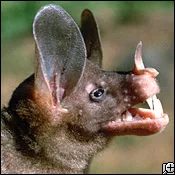
You have probably seen pictures of bats with sharp teeth and assumed they drink blood. That was the long-held belief about the false vampire bat. Vampyrum spectrum is the largest bat in the New World and the only species in its genus. It looks terrifying enough to justify the name, but the reality is quite different.
These creatures do not sip on mammals. They hunt them.
How the False Vampire Bat Actually Hunts
The diet of Vampyrum spectrum is strictly carnivorous, though not in the way you might expect. They feed on rodents, birds, and occasionally insects. They even eat other bats. The word “false” in their common name exists specifically to correct the misconception that they are sanguivorous.
Their hunting style is brutal and efficient. When they target mice, they pounce and break the neck, back, or skull. Birds are caught by the beak, and the bat crushes the skull with its long, pointy teeth.
After the kill, they do not eat on the spot. They usually take the prey back to a roost. This behavior suggests a level of planning and resource management that goes beyond simple opportunism.
Strange Social Behaviors
Most bats fly alone or in loose clusters. The false vampire bat is different. Scientists believe these animals form pair bonds.
There is one specific observation that stands out. Males have been seen folding their wings around their female partner and any young ones while nesting during the day. The likely reason? Heat retention. In a cool tree hollow, that body heat matters. It is a subtle, protective gesture that contrasts sharply with their predatory habits.
Where They Live and Why It Matters
You will find these bats in tropical forests. Their range stretches from southern Mexico down to Peru and Brazil, with a presence in Trinidad too. They roost in small groups, typically inside hollow trees or standing dead trees known as snags.
This specific habitat preference is exactly why they are in trouble.
Habitat destruction is the primary threat. When forests are cleared for agriculture or development, the hollow trees disappear. Without those specific roosts, the population declines. The species is currently classified as Lower Risk (Near Threatened), but that status can change quickly if logging continues unchecked.
False Vampire Bat Facts at a Glance
If you want to know exactly what you are looking at, here is the data:
- Family : Phyllostomidae (New World Leaf-Nosed Bats)
- Size : Head and body length is 5 to 5.3 inches (12.5 to 13.5 cm). The forearm measures 4 to 4.3 inches (10 to 11 cm).
- Weight : Between 5 and 7 ounces (150 to 200 g).
- Appearance : Brown fur, a leaf-shaped nose, large ears, and no tail.
- Life Cycle : Very little is known about their reproduction in the wild. One captive female gave birth in June, but that is all we have to go on.
Why This Discovery Matters
We tend to categorize nature into neat boxes. Herbivore. Carnivore. Omnivore. Vampire.