Music isn’t just background noise. It’s a constructed emotional language. Whether you’re listening to a drum circle in a remote village or a synthesized bass drop in a club, the core activity remains the same. Humans are engineering sound. We are shaping raw noise into something with form.
Consider the spectrum. On one end, you have the simple folk song. It’s stripped down. Personal. On the other, you have the complex electronic composition. Layered. Digital. Both fall under the same umbrella. They are conceptual. They are auditory. They exist to be heard and interpreted.
This isn’t a new phenomenon. Music has permeated every human society throughout history. It is protean. It changes shape to fit its container. It lends itself easily to words (song). It pairs with physical movement (dance). It has always been an adjunct to ritual and drama.
Why do we care so much about it?
Music has been credited with the capacity to reflect and influence human emotion.
We know this intuitively. But modern culture has operationalized it. Pop culture exploits these emotional levers constantly. Today, that exploitation happens via radio, film, television, musical theatre, and the Internet. It’s everywhere.
The power of music extends beyond entertainment. We see it in psychotherapy. In geriatrics. In advertising. There is a persistent faith in music’s ability to affect human behavior. We believe it can heal. We believe it can sell. Both beliefs rely on the same premise: sound moves us.
This movement has gone global. Publications and recordings have internationalized music. Significant works travel alongside trivial trends. The distinction blurs when the medium is digital.
Education reflects this global reach too. Teaching music in primary and secondary schools has attained virtually worldwide acceptance. It’s not just about learning notes. It’s about cultural transmission. It’s about recognizing that art, in any guise, is a universal constant.
But does the medium define the message? Or just the volume?

People have always listened to it. Yet, for most of human history, no one really argued that we needed it to survive. It was just decoration.
Democritus, the ancient Greek philosopher, put it bluntly. He claimed music wasn’t a necessity. It didn’t separate humanity from animals through survival need. It arose from “superfluity.” Excess. Luxury.
This view—that music is a mere grace, a pretty accessory to life—stuck around for millennia.
It’s only recently that psychological research into play and symbolic activity has started to crack that stubborn belief. We are beginning to see music not as background noise, but as a fundamental human structure.
Where to look next
If you want to trace how this “superfluity” evolved into a global constant, the encyclopedic entries offer a roadmap.
Geographic roots
Music isn’t a monolith. It’s a collection of regional histories. You can explore the deep roots in:
– African music
– Oceanic music and dance
– Western music
– Central Asian arts: Music
– Chinese music
– Japanese music
– Korean music
– Islamic arts
– Native American music
– South Asian arts: Music
– Southeast Asian arts: Music
– Folk music traditions
The mechanics of sound
To understand how it works, you look at the technical scaffolding:
– Counterpoint and harmony
– Instrumentation and tuning
– Mode and rhythm
– Musical sound and notation
– Composition, performance, and recording
– Music criticism
Genres that define eras
The output of these mechanics spans everything from the rigid structures of classical forms to the raw energy of modern styles. Key entries include:
– Blues, jazz, and rock
– Chamber music and symphonies
– Opera and choral music
– Electronic and rhythm and blues
– Fugues, sonatas, and concertos
– Theatre music and vocal music
The tools themselves
It’s impossible to separate the sound from the source. The instruments are treated as distinct entities:
– Electronic instruments
– Keyboard instruments
– Percussion instruments
– Stringed instruments
– Wind instruments
And then there are the specific legends. The clarinet. The drum. The guitar. The kayagŭm. The piano. The tabla. The theremin. Each has its own article, its own history, its own quirks.
The hard definition
Music is everywhere. It is the background score to almost every human ritual, celebration, and moment of grief.
But what is it?
Commentators often dodge the hard question by talking about “the relationship of music to the human senses and intellect.” They affirm that music exists within a world of human discourse. It requires us. It requires our brains to decode it.
Defining the thing itself? That’s harder.
Aristotle knew this. He admitted that determining the nature of music isn’t easy. Figuring out why anyone should bother studying it at all? Even harder.
We still don’t have a clean answer. We just know that without it, something feels… missing.

For a long time, people thought musical tone was just about regular vibrations. That uniformity created a fixed pitch. It separated music from noise. Traditional music seemed to support this view. But by the late 20th century, that idea stopped making sense. Composers started treating noise and silence as valid elements. They used random sounds. John Cage led the way here. He and others embraced aleatory features. These are works based on chance. They don’t rely on prior knowledge of the outcome.
Tone is only one part of music. Rhythm matters too. So does timbre. Texture is another key component. Electronic machinery changed everything. It allowed composers to abolish the traditional interpreter role. They could record sounds directly onto tape. Or into digital files. These were sounds humans couldn’t produce. Some were barely imaginable.
Early Indian and Chinese conceptions
Everyone knew music could move people. This power has always been recognized. Its ecstatic potential exists in all cultures. Usually, this power was admitted under strict conditions. In India, music served religion from the start. Vedic hymns mark the beginning of this record. Over centuries, the art form grew. It developed profound melodic and rhythmic intricacy. The structure was determined by religious texts. Or by story guidelines.
In the 21st century, the narrator remains central. Much Indian traditional music depends on them. A skilled singer’s virtuosity rivals instrumentalists. There is very little concept of vocal or instrumental idiom here in the Western sense. We don’t use chord structures vertically. That is, we don’t look at effects created by sounding tones simultaneously. South Asian classical music doesn’t work that way. The divisions of an octave are more numerous. Western music has fewer intervals. The melodic complexity here goes far beyond its Western counterpart.
Improvisation is retained. It is vital to the success of a performance. Spontaneous imitation happens between an instrumentalist and narrator. It plays against the insistent rhythmic subtleties of drums. This creates great excitement. It happens because of faithful adherence to rigid rules. These rules govern the rendition of ragas. These are the ancient melodic patterns of Indian music.
How does this impact modern listeners? The strictness of ragas might seem limiting. It actually creates space for freedom. The narrator leads. The instruments respond. It is a conversation. Not a dictation.
“The spontaneous imitation carried on between an instrumentalist and narrator… can be a source of the greatest excitement.”
This dynamic contrasts sharply with Western classical traditions. Where notation is law, here the notation is a skeleton. The meat comes from the moment. The drummer sets the pulse. The sitar or sarod player navigates the raga. They can stretch time. They can bend pitches. The audience watches for that spark. The connection between performer and listener changes. It becomes immediate.
Is this still relevant today? Yes. The influence of these ancient systems persists. Modern global music often borrows from these improvisational structures. The rigid rules of ragas provide a framework. But the content is fluid. It breathes. It lives in the moment.
Why this matters now
We are seeing a resurgence of interest in these older forms. Not just in academic circles. In pop culture too. Artists are sampling these textures. They are borrowing the rhythmic subtleties. The distinction between noise and tone has blurred further. Electronic producers use granular synthesis. They break sounds down to their atomic components. This echoes the experimentalism of Cage. But it also respects the intricate melodic structures of Indian music.
Which composers are bridging this gap? Several contemporary artists mix these elements. They use digital tools to recreate the spontaneity of the raga. The result is music that feels familiar yet strange. It challenges our expectations of pitch. It questions our definition of rhythm.
Where is this heading? The lines between composed and improvised are getting thinner. The role of the interpreter is still shifting. But now, the software is the interpreter. Or the algorithm. The human element remains. It provides the intention. The machine provides the execution.
This isn’t just history. It’s current. The techniques from early Indian conceptions are being re-evaluated. They offer a different path. One that doesn’t rely on fixed pitches. One that embraces complexity. The excitement remains. It just finds new outlets
The Confucian Code: Why Chinese Music Was Never Just Entertainment
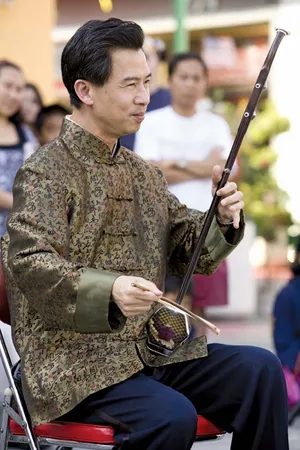
In China, music didn’t hang out in the background. It wasn’t ambient noise for a party or a soundtrack to a movie. It was structural. Like Indian classical traditions, Chinese music served ceremony and narrative. It had a job to do.
Confucius didn’t see it that way, though. He saw it as the bedrock of social order.
Confucius on Power and Pitch
Confucius lived between 551 and 479 bce. He believed music wasn’t art for art’s sake. It was a governance tool.
He tied music directly to political stability. If the music was harmonious, the state was stable. If the music was chaotic, the government was failing. They reflected each other.
This wasn’t just poetic. It was a hiring requirement.
According to Confucius, only a superior man could truly understand music. And only that same person was qualified to rule.
Why? Because music reveals character.
The Six Emotions of Statecraft
Confucius identified six specific emotions that music could portray. These weren’t just feelings. They were moral indicators.
- Sorrow
- Satisfaction
- Joy
- Anger
- Piety
- Love
If a ruler could navigate these through music, he could navigate the populace. Music was a mirror. It showed who you really were. Pretense was impossible. Deception dissolved under the weight of true harmony.
Harmony as Cosmic Order
Great music wasn’t just pleasant to hear. It was harmonious with the universe.
This harmony did more than soothe. It restored order to the physical world. It aligned society with the cosmos.
When music functioned correctly, it corrected the chaos of human behavior. It wasn’t entertainment. It was engineering.
Why This Matters Today
We think of music as escapism. Confucius thought it was calibration.
This perspective shapes how we view traditional Chinese music today. It’s not just about melody or rhythm. It’s about function. It’s about the role of sound in creating a well-ordered society.
The link between artistic expression and moral leadership remains a fascinating, if outdated, concept. But it explains why so much of ancient Chinese music feels so rigid. So purposeful.
It wasn’t meant to be fun. It was meant to be right.

You can’t hear it. Not really.
Despite how central music was to ancient Greek life, the actual sounds are lost. We have a handful of notation fragments. They are useless without a key. No one knows the scale. No one knows the tempo.
The Greeks loved to speculate. They treated music like math. Socrates even had a dream about it. But the word mousike meant something else back then. It covered every art under the Muses. It wasn’t just songs and scales. It was everything.
Still, they cared about the sounds we’d recognize. Pythagoras (c. 550 BCE) made music a branch of mathematics. He was the first musical numerologist. He laid the groundwork for acoustics. The Greeks figured out that pitch relates to string length. Simple enough.
They stopped short, though. They never calculated pitch based on vibrations. They tried to link sound to motion, but the math didn’t quite click.
Plato’s Musical Dictatorship
Plato (428–348/347 BCE) treated music like ethics. He was obsessed with regulation. Think Confucius, but with lyres. He wanted to control which modes people heard. Modes are just note arrangements. Scales.
Plato was a stern disciplinarian. He believed music reflected character. Straightforward simplicity was the only way to go. In his work Laws, he banned rhythmic and melodic complexity. He thought it caused depression and disorder.
“Music echoes divine harmony; rhythm and melody imitate the movements of heavenly bodies…”
Earthly music was suspect to him. It had emotional power. Dangerous power. He distrusted it. So he called for censorship. Only morally approved music was allowed. Balance between music and gymnastics was the ideal curriculum. For Plato, music was a psychosociological tool. Its effect was what mattered, not its beauty.
Aristotle’s Richer Diet
Aristotle took a different tack. He kept the imitation idea but added nuance. Art could contain truth. Plotinus later made this explicit in the 3rd century CE, giving the symbolic view more weight.
Aristotle agreed music molds character. But he allowed all modes. Happiness and pleasure were valid goals for both the individual and the state. He advocated a rich musical diet.
He also made a sharp distinction. You can have theoretical knowledge without playing. But if you don’t produce music, you can’t judge it properly. Performers know what performers know.
Listening Over Math
Aristoxenus, Aristotle’s pupil, flipped the script. He gave credit to human listeners. Perception mattered more than physics. He dismissed the dominance of mathematical and acoustical considerations.
For Aristoxenus, music was emotional. It had a function. Both hearing and intellect were required to understand it. Individual tones only made sense in relation to others. Context was everything.
The Epicureans and Stoics went naturalistic. They saw music as an adjunct to the good life. More emphasis on sensation than Plato. But still in service of moderation and virtue.
Then came Sextus Empiricus in the 3rd century. He dissented. Music was just tones and rhythms. It meant nothing outside itself.
The Enduring Echo
Platonic thought dominated musical philosophy for a millennium. Then came periodic rededication to Greek concepts. Late 16th-century Florentines, the Camerata, are the prime example. They helped birth opera.
These movements valued simplicity and the primacy of the word. They paid homage to Plato, even if their practices differed from the Greeks themselves.
We still feel the grip of Greek thought today.
We believe music influences ethics. We try to explain it through numbers, or some higher source. We label its specific effects. We connect it directly to human emotion.
Every era has defectors from these views. Emphases shift. But the framework remains.
Music in Christianity
When Melody Meets the Text
Boethius didn’t just preserve Greek philosophy. He repackaged it for the church. The Platonic-Aristotelian framework he restated in the early 6th century was a perfect fit for religious institutions. Its conservative streak, marked by a deep-seated fear of innovation, helped maintain social and spiritual order.
Music wasn’t an independent art form in this worldview. It was an accessory to words.
Nowhere is this hierarchy more visible than in Christian history. The primacy of the text is emphasized constantly. In Roman Catholic doctrine, it is practically an article of faith. Plainchant illustrates this relationship perfectly. Melody served to illuminate the text. The configurations of sound took their direct cue from the words. The music existed to serve the language, not the other way around.
St. Augustine understood this tension. He valued music’s utility for religion. Yet he remained fearful of its sensuous element. He was anxious that melody would ever take precedence over the words. This was a concern Plato had raised centuries earlier.
Still echoing the Greeks, Augustine held to a specific belief. St. Thomas Aquinas would later reiterate it. The basis of music is mathematical. Music reflects celestial movement and order.
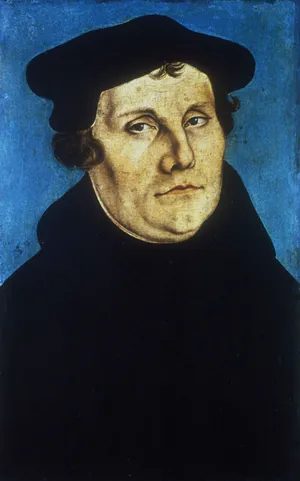
The Reformation’s Soundtrack
Martin Luther didn’t just break from Rome; he redefined how believers listened. Born in 1483 and dying in 1546, he was a musical liberal long before the term carried its modern baggage. But don’t mistake his innovation for chaos. Luther demanded simplicity. He wanted music that was direct, accessible, and stripped of ornamental excess. His goal was clear: music had to serve piety, acting as a vehicle for devotion rather than a distraction.
He believed specific musical modes carried inherent emotional qualities. This wasn’t new thinking. It echoed Plato’s ancient theories and Confucius’s ethical frameworks. Music shaped the soul, and therefore, it had to be curated carefully.
John Calvin (1509–1564) viewed the same landscape with far less optimism. Where Luther saw potential, Calvin saw peril. He warned against music that was voluptuous, effeminate, or disorderly. For Calvin, the text reigned supreme. Any musical element that threatened to overpower the words was suspect. He didn’t trust the ear to lead the spirit.
17th- and 18th-century Western conceptions
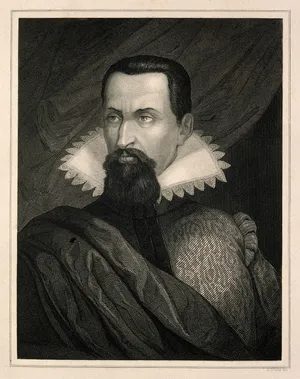
The Math Behind the Music: When Philosophy Met Pitch
The Pythagoreans never really left us. You can see their ghost in every attempt to link sound to the cosmos, a lineage that stretches far beyond ancient Greece. Take Johannes Kepler. The German astronomer didn’t just map planetary orbits; he tried to force music into that equation. For him, the “harmony of the spheres” wasn’t just a metaphor. It was a literal translation of celestial mechanics into auditory experience.
Then came René Descartes. He viewed music through a rigidly mathematical lens, sticking to his Platonic roots. His goal? Control. He believed in temperate rhythms and simple melodies because he feared the alternative. Complex, exciting music could stir the imagination. Stirring the imagination led to excitement. Excitement, in his view, bordered on the immoral. He wanted order. He wanted predictability.
Gottfried von Leibniz took it a step further. The philosopher-mathematician didn’t just see numbers in music; he saw the structure of reality itself. To him, music was a reflection of a universal rhythm. It wasn’t about the notes on a page. It was about a subconscious apprehension of numerical relationships. You didn’t just hear it. You felt the math in your mind.
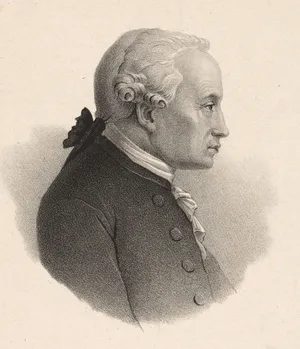
Kant, Hegel, and the Problem of Wordless Sound
Immanuel Kant didn’t hold music in high regard. The 18th-century philosopher placed it at the very bottom of his hierarchy of the arts. His main gripe? It had no words. To Kant, music was fine for a little enjoyment, but it had zero utility when it came to building culture. He only conceded that it might gain some conceptual weight if it shackled itself to poetry.
Georg Wilhelm Friedrich Hegel had a slightly more nuanced take, but he was on similar ground. Hegel believed art expressed the divine, yet he insisted it must ultimately yield to philosophy. He admitted music had a unique power to capture emotional nuance. Still, like Kant, he preferred vocal music. He dismissed instrumental tracks as too subjective, too indefinite. For Hegel, the core of music was rhythm. This rhythm mirrored the innermost self.
What Hegel saw as revolutionary was this: music doesn’t exist in space like painting or sculpture. It isn’t “objective.” The fundamental rhythm of music is something you experience inside your own head. It’s an aspect of number. It lives within the hearer.
The Shift Toward Intrinsic Meaning
After the 1700s, people started asking deeper questions about what music actually is. The pieces for a comprehensive theory of its function began to fall into place. But remember, the thinkers mentioned above weren’t really philosophers of music. They were philosophers looking at music from the outside.
They cared about observable effects. How did it connect to dance? Religious ritual? Festive rites? They focused on its alliance with words. They looked at extramusical considerations. The only thing they all agreed on, beyond simply noting different types of music, was its link to emotional life. That’s the problematic power of the art. It moves you.
These extramusical preoccupations give rise to what we now call “contextualist” explanations. Contextualism cares about music’s relation to the human environment. It’s not about the notes themselves. It’s about the world around them.
Music interests philosophers in terms extrinsic to itself, in its observable effects.
The history of music itself is basically a record of its adjunctive function. Think rituals. Religious ceremonies. Military parades. Courtly events. Musical theatre. Music’s protean character allows it to ally easily with literature and drama. Folk songs. Art songs. Operas. Background scores. It works with dance too. Ritual dance. Popular entertainment. Social dancing. Ballet.
This versatility confirms the wide range and influence that the ancient Greeks assigned to it.
Theoretical Silence Before the 19th Century
Before the 1800s, musicians rarely acted as theorists. At least not if you define a theorist as someone who explicates meaning.
When music theory did exist, it wasn’t about meaning. It was a technical manual. It guided vocal or instrumental performance. It provided directions for church or theatre practice. It was a missive advocating for reforms.
Prolific masters like Johann Sebastian Bach didn’t write learned treatises. Bach produced monuments of art. He didn’t explain his meaning. He just made the music.
The concept of dynamism
The 1800s gave us a strange breed of musician-critics. Think Carl Maria von Weber, Robert Schumann, Hector Berlioz, Franz Liszt. They wrote essays. They loved literature. But they weren’t building systems. They weren’t writing textbooks.
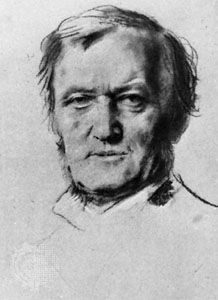
Richard Wagner tried. He was an active theorist. He presaged the modern composer-author. But he didn’t actually move music theory forward. His big idea was the Gesamtkunstwerk. Total work of art. It was a mess of musical and non-musical elements. It added to the confusion. It didn’t explain his genius.
His genius was distinctly musical. You see it in The Ring of the Nibelung. Four operas. No amount of his discursive credos explains that.
Then came the 20th century. Igor Stravinsky. Arnold Schoenberg. They were composer-authors too. But they were better at it. They elucidated their techniques. They explained their aims.
The concept of dynamism
What is dynamism in music? It’s not just volume. It’s motion. It’s energy. It’s the drive forward.
In the 19th century, dynamism was often programmatic. It told a story. It painted a picture. The music followed the plot.
But in the 20th century, things changed. The dynamism became internal. It was structural. It was about the music itself.
Stravinsky knew this. He didn’t need a story to drive the rhythm. The rhythm drove itself.
Schoenberg’s serialism had its own internal logic. It wasn’t about emotions. It was about pitch.
This shift matters. It changed how we listen. It changed how composers write.
Dynamism isn’t just loud. It’s alive. It’s moving.
Why does this matter now? Because we still listen for that drive. We still feel it. Even when the music is quiet. Even when it’s complex.
It’s the pulse. The heartbeat.
And it’s still there.
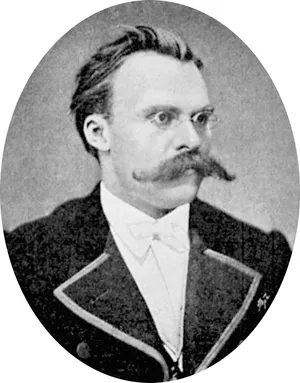
Why Music Feels Like Pure Motion
If you’ve ever wondered why a minor chord hits different than a minor chord in a painting, it’s because music refuses to play by visual rules. This idea didn’t pop up overnight. It comes largely from two German philosophers who treated music as something entirely distinct from the static arts: Arthur Schopenhauer and Friedrich Nietzsche.
They didn’t just disagree on aesthetics. They shared a core principle about how we experience sound. Both men argued that music operates on dynamism. It is not “spatialized” like a sculpture or a landscape. You can’t point to a specific spot in a symphony and say, “The tension lives here, in this three-inch square.”
“Music is closer to the inner dynamism of process; there are fewer technical (and no concrete) impediments to immediate apprehension.”
This lack of spatial grounding is exactly what makes music so potent. Other arts are bound by the physical world. A novel has to be read left-to-right. A painting exists on a canvas with edges. Music bypasses that entire empirical layer. It doesn’t ask you to decode space. It asks you to feel process.
Schopenhauer saw this as music being closer to the “inner dynamism” of reality itself. Nietzsche took a similar line, though his phrasing diverged. The result is the same: music has fewer concrete impediments. You don’t have to interpret symbols or decode spatial relationships. You just apprehend it.
This is why a film score can shift the meaning of a scene without a single word being spoken. The music isn’t describing the action. It’s mirroring the emotional momentum behind it. It’s immediate. It’s unencumbered by the rules of geometry.
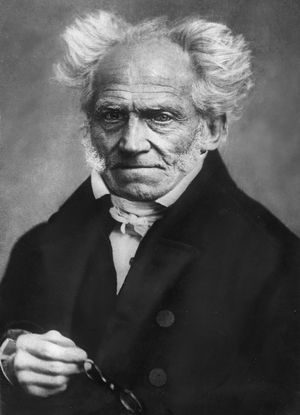
Schopenhauer didn’t just think music was pretty. He thought it was dangerous. While he viewed Platonic ideas as mere objects of the will, music was something else entirely. It wasn’t a copy of an Idea. It was the copy of the will itself.
That distinction matters.
Other arts speak of shadows. They point to things. Music speaks of the thing itself. That’s why it hits harder. It’s more powerful. More penetrating. It doesn’t ask for your intellectual approval. It just bypasses you and goes straight to the gut.
Kant got this wrong, according to Schopenhauer. He underestimated music’s efficacy. The effect isn’t just strong. It’s quicker. More necessary. Infallible. People have practiced it for ages. They still can’t account for it. They understand it directly. And they give up on trying to abstract that understanding.
There’s a connection there. A link between human feeling and music. It restores our inmost emotions. But stripped of reality. Removed from pain. It’s an analogue. A symbol of the will.
Nietzsche took that idea and split it in half. Apollonian and Dionysian. Form and rationality versus drunkenness and ecstasy. For him, music was the Dionysian art. The absolute peak of it.
In The Birth of Tragedy from the Spirit of Music, he saw something coming. The 20th-century discovery that symbol making is automatic. Necessary. Whether in dreams, myths, or art. His insights were rich. Prescient. He understood the symbolic analogue—the function of ordering and heightening the actual world’s ingredients. He saw the polarities of experience. The conflict itself. Stravinsky would later explore similar ground.
But Nietzsche had no patience for math in music. He also hated programmatic music. The kind that tries to imitate natural sounds. Tone painting was the antithesis of music’s essence. To him, music created myths. Not descriptions.
Since the 19th century, theorists have tried to explain why music appeals to everyone. The results? Contradictory. Controversial. A mess.
You can’t isolate these views. They overlap. Look at Edmund Gurney. English psychologist. 1847–88. He mixed formalism, symbolism, expressionism, and psychology. All in one framework. Proportions varied. But the point is, the categories aren’t clean.
Some disagreements are just semantic. Terminology problems. Definition issues. But then there are the diametrically opposed views. The ones people cling to. Tenaciously.
Referentialists and nonreferentialists
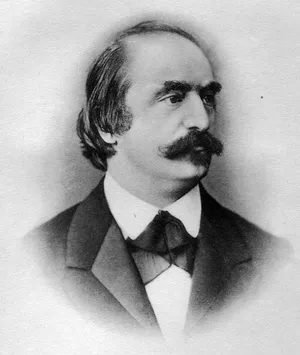
The Great Music Debate: Meaning vs. Form
The debate over what music actually means is old, tired, and stubbornly unresolved. It usually boils down to two camps that refuse to share the sandbox. On one side, you have the referentialists (or heteronomists). They argue that music points to something outside itself. It’s a signpost. It refers to emotions, stories, or ideas that exist in the real world. On the other side are the nonreferentialists. These folks—often called formalists or absolutists—insist that music is autonomous. It doesn’t need to point anywhere else. It just is. It means itself.
Enter Eduard Hanslick.
If you’re digging into the history of music criticism, you can’t ignore him. He was an Austrian critic who wrote The Beautiful in Music back in 1854. The original was in German, naturally. Hanslick was a die-hard formalist. He believed music was an art of intrinsic principles and ideas. It didn’t need to borrow meaning from poetry or painting. It stood on its own two feet.
But here is where it gets messy. Even Hanslick, the ardent formalist, couldn’t completely dodge the problem of emotion. Can music be purely abstract if it makes us cry? Hanslick’s position is actually classified as a modified heteronomous theory. He tried to keep his feet in the formalist camp while acknowledging that music has some connection to feeling. It’s a compromise. A shaky one.
Why does this matter today? Because we still ask the same questions. Does a symphony describe a storm? Or is it just sound? The answer depends on who you ask. And the disagreement hasn’t gone away. It just gets louder.
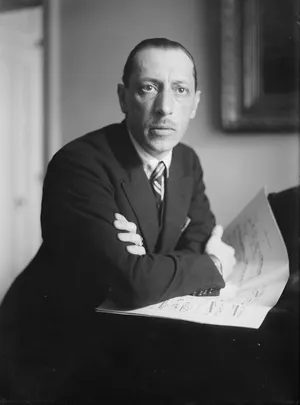
You won’t find many hardliners these days. The binary war between referentialists—who claim music points to something outside itself—and nonreferentialists, who insist music is its own entity, has blurred into something far more interesting. Igor Stravinsky proved this early on. He shot to fame writing ballet scores, works dripping with extramusical associations. It would be a lazy shortcut to label referentialism as “program music” and nonreferentialism as “absolute music.” That distinction collapses under scrutiny.
Why? Because extramusical referents range from a simple descriptive title to the labyrinthine Wagnerian leitmotif, where a specific musical phrase is locked to a specific character or idea. Referentialists don’t need an explicit program note to make their case. Nonreferentialists aren’t necessarily trash-talking program music; they just draw a hard line between the external narrative and the internal musical meaning.
Take Leonard Meyer. In his 1956 book Emotion and Meaning in Music, the American musicologist and theorist introduced “designative” and “embodied” meanings. He saw both operating in music, giving roughly equal weight to the intrinsic and the extrinsic.
The Problem of Embodied Meaning
If music has intrinsic meaning, the next question is what that actually is and how we grasp it. An extreme formalist would argue the acoustic pattern is the sense. Eduard Hanslick said something close to this, though he didn’t hold the line consistently. Most nonreferentialists, however, view music as emotionally meaningful.
Referentialists agree there’s expression in the notes, but they trace that emotional content back to extramusical origins. Think of John Hospers in Meaning and Truth in the Arts (1946) or Donald Ferguson in Music as Metaphor (1960). Meyer noted that while most referentialists are expressionists, not all expressionists are referentialists. He coined terms like “absolute expressionist” and “referential expressionist,” placing himself squarely in the “formalist–absolute expressionist” camp.
Meyer’s stance was eclectic and permissive. He acknowledged music could express both referential and nonreferential meanings.
Critics argued he didn’t clearly explain how referential meaning operates in music. But his flexibility opened the door for a more nuanced understanding of what we hear.
Intuition vs. Intellect
Theorists mostly agree on one thing: music is auditory. Hearing is step one. Beyond that, it’s a free-for-all. The debate often splits between intuition, championed by Benedetto Croce (1866–1852), and intellectual cognition, defended by Hospers. Samuel Gurney earlier suggested a special musical faculty that resided neither in the mind nor the heart, but somewhere in between.
The core issue remains the stubborn habit of splitting thought and feeling. Henri Bergson broke from that tradition by advocating for an “intellectual act of intuition.” In the mid-20th century, a renewed focus on organic unity linked disparate works: Gurney’s The Power of Sound (1880), Susanne K. Langer’s Philosophy in a New Key (1942), John Dewey’s Art as Experience (1934), and Roger Sessions’s The Musical Experience (1950).
Music clearly connects to human emotion. The “how” remains elusive. Sessions, echoing Aristotle, put it best:
**
No one denies that music arouses emotions, nor do most people deny that the values of music are both qualitatively and quantitatively connected with the emotions it arouses. Yet it is not easy to say just what this connection is.
The Language Myth
Calling music the “language of the emotions” went out of style because it lacks precise semantics. Two listeners can walk away from the same piece with wildly different interpretations. Spoken language can’t consistently render these musical meanings. Verbal explanation often raises more questions than it answers.
Philosophical analysts who believe all meaning must be translatable into language often dismiss music as meaningless. Referentialists try to save it, but even they struggle against the prevailing view. The problem is semantic. It explains why some theorists swapped out “meaning” for terms like import, significance, pattern, or gestalt.
Recognizing that nonverbal arts don’t fit neatly into discursive thought, it’s no surprise that music aestheticians remain a rare breed. The gap between what we feel and what we can say about it remains wide.
The mid-20th century saw a wave of music theorists classify themselves as symbolists, though their work often blurred into formalism and expressionism. Susanna Langer dominated the conversation. Her critics, particularly John Hospers, hated her terminology. They argued that a symbol must point to a specific, definite meaning. Langer pushed back. She reserved “symbol” for broader, ambiguous connections and used “signal” for direct, fixed references.
This distinction wasn’t new. It traced back to Goethe, Thomas Carlyle, and the French Symbolist poets of the 19th century.
Critics charged Langer with weakening her own argument through this linguistic whiplash. She called the musical symbol “unconsummated” because of its inherent ambiguity. But did her theory actually rely on that word? No. Her core ideas aligned closely with Edmund Gurney, who never used the term “symbol” at all. If you swapped Langer’s “symbol” for Gurney’s “ideal motion,” most objections would vanish.
Langer viewed art as a “symbolic analogue of emotive life.” She believed artistic form and content were an indissoluble unity. Each art form expresses this unity according to its own medium. For music, that medium is time. The symbolism is tonal, realized only through duration. In psychological experience, time takes on an ideal guise.
Painting and sculpture? They embody ideal space.
Langer’s framework embraced all arts. Her concepts were later adapted by American theorist Gordon Epperson. He applied her ideas intensively to music in The Musical Symbol (1967). The debate over what music “means” continued, but the groundwork was laid.
Contextualist theories
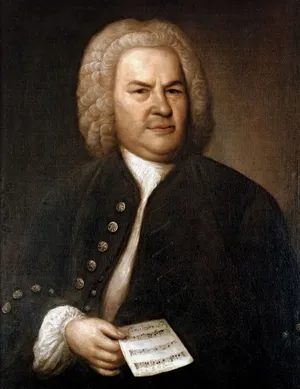
The jump from symbolic to contextual explanations of music is messy. A huge source of confusion stems from how we label tone painting. When a piece uses explicit signals to yield designative meanings, people often call it musical symbolism.
Take Bach. In the unfinished final fugue of the Art of the Fugue, he introduces a theme corresponding to the letters of his own name. That is tone painting. It qualifies on one level. But argue that there is intrinsic symbolism in the musical meaning itself, and referentialists generally recoil.
Many theorists who care about sociological or psychological effects aren’t opposed to profound meaning. They are just indifferent to it.
“Musical meaning and communication, he maintained, cannot exist in the absence of the cultural context.”
Even absolutists can’t examine music in isolation from its human environment. Meyer deliberately avoided logical and philosophical problems. He made no attempt to decide whether music is a language or whether musical stimuli are signs or symbols. He didn’t defend the idea that such concerns are irrelevant to meaning, though.
The statement that meaning requires cultural context is hardly open to dispute. Theorists are classified by their proximity to the referential or nonreferential pole.
Referentialists emphasize explicit aims and associations. Think of Gebrauchsmusik, or utility music written for specific social purposes. Formalists counter that there is intrinsic, embodied meaning. They attach greater aesthetic value to that.
The Contextualist Split
Among contextualists, a simple referential view is the exception.
Theorists examining musical perception are studying a complex human activity. They deal with the psychology of music. Elements like the listener, the mode of apprehension, and the cultural context are indispensable.
Specialists pick one element. Formalists focus on the music. Sociologists look at the listeners and their milieu. Psychologists study the how of perception.
Psychology could survey the whole field. In practice, psychologists investigate measurable acoustic phenomena. Or the physical-mental effects of musical sound. Rarely, they look at the functional role of music in human experience. Pragmatists and analysts alike may leave something out.
It remains for the comprehensive theorist to construct a valid hierarchical structure of musical meaning. Think of Langer. Someone equipped to discern relationships among many departments of thought.
Deryck Cooke offers a different angle. The British musicologist and author of The Language of Music (1959) is a referential expressionist. He offered a sophisticated argument for music as language.
Concepts may not be rendered by this language. Only feelings. Cooke reaffirmed that feelings may be recognized, identified, and classified. He confined his investigation to the last few hundred years of the Western tradition.
Information Theory and Sonic Messages
Abraham Moles brought information theory to musical perception in Information Theory and Esthetic Perception (1966). He emphasized that form is the essential thing. The “sonic message” is a whole. Its dimensions vary from one composition to another.
Information theory proved to be a novel ally for organicists.
The message is subjected to atomistic study of its components. Recording makes it concrete. There is a temporal sonic material, a materia musica. Moles reinforced the aesthetic theory of distance:
“The esthetic procedure of isolating sonic objects is analogous to the sculptor’s or decorator’s isolating a marble work against a black velvet draping… This procedure directs attention to it, alone and not as one element among many in a complex framework.”
Moles also discussed information theory. It begins without traditional theory, which he found untenable. Musical messages discerned through information theory are not referential. Yet Moles described measurable elements in the sonic repertoire as symbols.
“Each definable temporal stage represents a ‘symbol’ analogous to a phoneme in language.”
Music must obey rules. The role of aesthetics is to enumerate universally valid rules. Not to perpetuate the arbitrary or merely traditional.
He foresaw experimentation with a much richer repertoire of sounds. Transcending musical instruments. Drawing on whatever sources, certainly electronic ones, for the “most general orchestra.”
A host of composers set out to fulfill this desideratum. Electronic synthesizers were constructed to increase the compass of possible sounds. In electronically synthesized music, the medium itself is indistinguishable from its message.
The Distillation Problem
The quest for some distillation of musical meaning may be foredoomed to failure.
Meanings, intrinsic and extrinsic, abound. Meanings of all kinds are revealed in and through the social setting. Church, theatre, and broadcasting affect music in characteristic ways.
The modern concert is a device whereby formal, autonomous meanings are emphasized. The scope and available repertoire of the concert have been enormously increased through recordings.
Any suitably equipped room may become a recital hall at the turn of a switch. But does that change how we hear the notes? Or just where we hear them?
The history of listening and why it changed
Listening to music for its own sake. That is a modern obsession.
Before the 17th century, music was mostly functional. It was for dancing. It was for ritual. It was for storytelling. You didn’t sit in silence and analyze the harmony. You moved with it.
Public opera houses? Not until 1637 in Venice. First paid public concerts? London, 1672.
For decades, this was a novelty. The modern concert experience—quiet room, focused attention, serious listening—didn’t really take root until the late 18th century.
Renaissance structures and instrument evolution
Renaissance forms like the mass, motet, and madrigal were tied tightly to text. The words shaped the structure.
Instrumental music served the voice. Mostly.
But the 16th century saw instrumental music start to stand alone. Technical fluency became king. Instruments got more complex.
The modern violin appeared in the late 1500s. It slowly replaced the viol. The piano didn’t fully dethrone the harpsichord until the 18th century.
Stop thinking of early instruments as “primitive.” Research has demolished that idea. Performers today restore their original sounds and spirit.
The rise of autonomy and the listener’s burden
Opera, oratorio, and cantata made vocal music dominant in the Baroque era (c. 1600–1750).
But then came the Viennese classicists. Haydn and Mozart. Later, Beethoven.
They gave us the modern sonata. Solo, duo, piano trio, string quartet, concerto, symphony.
This shift changed how we listen.
Without a text to lean on, you have to focus on the sound itself. The color. The intensity. The tonal organization.
Listening became a rigorous activity.
And many people still resist it.
We expect enjoyment without effort. That expectation kills new, demanding idioms.
Langer called it “the madhouse of too much art.”
If you want to handle it, you need discipline. You need discrimination. Music education now argues for “aesthetic education”—focusing on qualitative value rather than just making music.
Popular music as academic subject
Rock. Soul.
These genres developed a strong pedagogical interest. Especially among the young.
Their festivals felt like religious exaltation.
The texts are emotional. Political protest. Calls to dance. The accompaniments? Guitars, keyboards, percussion. Electronically amplified.
Music educators saw value in the structure. The rhythmic characteristics. The modal qualities.
By the mid-20th century, rock was a massive sociological phenomenon.
Postsecondary institutions started programs. By the early 21st century, musicologists were studying virtually every major genre of popular music globally.
It’s not just noise anymore. It’s a field of study.
“A music so vital and widespread, moreover, was deemed by many to be worth studying in school.”
The lines between high art and popular culture have blurred. Or maybe they never really existed.
We just keep listening.
Music isn’t just background noise. It’s a mirror for how we view the world. Humanist psychologists like Gordon Allport and Abraham Maslow saw it as a tool. A way to reach self-actualization. Integration. It was one option among many for self-fulfillment.
Then there are the existentialists. Jean-Paul Sartre looked at music through the lens of choice. Freedom. It was another department of existence where you had to make a call. Karl Jaspers and Martin Buber took a different path. Spiritual existentialists. They heard transcendent overtones in the sound. Music wasn’t just notes. It was a bridge to the infinite.
Expressionists like Arnold Schoenberg, Ernst Krenek, and René Leibowitz were less interested in transcendence and more in duty. Their music carried austere moral imperatives. Sometimes doctrinaire. They believed art had a job to do. Theodor Adorno, a composer-philosopher and student of Alban Berg, understood this. He wrote about dazzling lucidity. His humor was dry. But his tone was one of obligation. He saw musicians as part of their environment. Always interacting. Always responsible.
Only the expressionists were primarily committed to music itself. Adorno included. He didn’t isolate music from the world. He kept it in focus.
Play? Not really. The aesthetic concept of play was absent for most. Except for Maslow and other humanists. For Sartre, even a humanist, the tone was heavy. Responsibility. Weight.
Educators got this wrong for a long time. They tried to present discipline content as “fun.” A misinterpretation of John Dewey’s ideas. Dewey himself cared deeply about aesthetic education. He didn’t want to trivialize it. He knew better.
But play in an aesthetic sense follows rules. Information theory proves this. Even controlled aleatory composition has limits. Randomness isn’t chaos. It’s structured chaos.
And the play can be serious. Very serious. Take the 12-tone technique. A 20th-century atonal style. Practiced by Viennese expressionists and their successors. It’s not just noise. It’s a system. A rigorous framework for creating meaning without traditional tonality.
Tonality and meaning
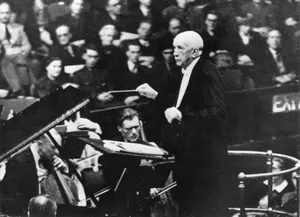
Why Contemporary Music Feels So Alien to Most Ears
The biggest stumbling block for casual listeners, and even seasoned pros, in modern classical music is the disappearance of explicit tonality. This explains why Schoenberg and his crew took so long to catch on with the general public. Their vocabulary is just too esoteric.
Let’s get one thing straight. Nineteenth-century composers pushed tonality to its absolute breaking point. But looking back, Wagner, Richard Strauss, and even early Schoenberg never actually broke free from the system. Debussy’s “exotic” sounds? Just decoration layered over a solid tonal foundation. Stravinsky’s key juxtapositions were also grounded in that same tradition.
This doesn’t mean Western tonality is superior. Or natural. Ethnomusicology has thoroughly debunked that parochial view. Yet, some still cling to the idea that harmonic practices based on overtone physical laws are the only “natural” source of development.
The tone rows used in 12-tone compositions are a technical substratum. They must be no more explicit in the finished work than the chemical makeup of pigments in the Mona Lisa.
It’s worth asking if any folk music actually exhibits atonal characteristics. Probably not in the way we define it, but the question highlights how specific our definition of “natural” music really is.
The Technical Substratum vs. Musical Worth
Tonality is just one aspect of musical meaning. It isn’t the whole story.
In Schoenberg’s 12-tone compositions, the tone rows function much like major and minor keys did in earlier eras. They are a underlying structure. The devices chosen might make a piece harder to understand or access. But those devices aren’t what determine the work’s quality.
The same applies to timbre. The 19th century saw a massive explosion of orchestral works exploiting unique instrument sonorities. Liszt. Berlioz. Control of volume became a rich source of color. Works with literary or extramusical associations were perfect vehicles for these sonorous effects.
But color, like tonality, must be evaluated within its musical context.
20th-century aestheticians like Susanne Langer argued that words themselves are musical ingredients rather than just discursive ones. They are “assimilated” by the song. The meaning doesn’t sit on top. It becomes part of the sound.
So when you listen to modern works, stop hunting for a familiar key center. It’s not there. You’re looking for the chemistry, not the pigment.