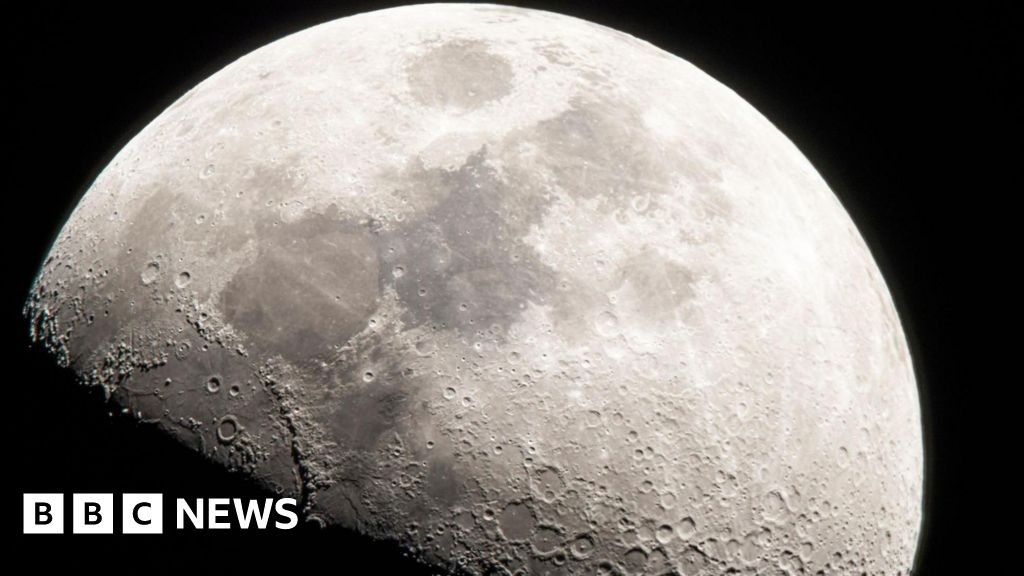
NASA dropped the blueprint Tuesday. Robotic landers. Hopping drones. Heavy vehicles. The goal? A permanent American foothold on the Moon.
It is a bold claim. The agency wants to get boots back on the lunar soil before Donald Trump’s presidency ends in 2029
Jeff Bezos’ Blue Origin is among the contractors getting the nod. They, along with Intuitive Machines and Astrobotic, will build the machinery needed for this ambitious timeline
The Race Is Real
Why the rush? Pressure. Specifically, pressure from China.
Beijing isn’t standing still. They launched the Shenzhou-23 on Monday, sending astronauts to the Tiangong station. Their goal? Humans on the Moon by 2020… wait, by 2030
NASA knows the clock is ticking. They announced a $20 billion program in March. A south pole base, powered by nuclear reactors and solar panels, operational by 2032
Jared Isaacman, the administrator, put it plainly.
The US will “never give up the Moon again.”
A base allows for science, yes. Resource mining, maybe. But really, it’s a staging ground for Mars. At least, that’s the theory.
Expert Doubt
Most scientists roll their eyes at the dates.
Realistically? NASA is likely behind. Artemis II flew four astronauts around the Moon this April. Success, sure. But landing humans? That’s harder. Dr. Simeon Barber of the Open University didn’t mince words. He said he wouldn’t be surprised if China wins the race.
Setbacks in securing landing crafts have plagued the US mission. China just keeps forging ahead
The Machinery Phase
Phase one is all robots.
Before humans risk their lives, machines will map the terrain. Hopping drones will scout. Landers will test the soil
Blue Origin’s lander, named Endurance, needs to land precisely. It needs autonomous navigation. Astrobotic’s Griffin-1 is heading for Nobile Crater near the south pole. Both carry instruments—high-res cameras, laser tools for safe touch-downs
By 2029, NASA executives predict 25 launches. Four metric tons of cargo delivered to the surface. Carlos García-Galán calls this the “Ignition” phase of the moon base program.
Power and Permafrost
Next comes power. Nuclear fission reactors. Solar arrays. The south pole is the prize because of ice. Frozen water means drinking water. It means oxygen. It means fuel
By 2032, astronauts would live there in semi-permanent habitats. Rovers would let them roam further across the jagged landscape
But here’s the catch. The entire plan hinges on one thing: a spacecraft ready to transport humans safely. That ship doesn’t fully exist yet
Can they really build the rocket, the base, and the power grid in five years? Probably not. But they’ll try anyway