Tiny diving suits. That is what engineers just built for cockroaches. Not just any suits, mind you, but functional ones. The insects can now survive underwater for up to three hours.
A bold move for a bug with a bad reputation.
Breathing underwater
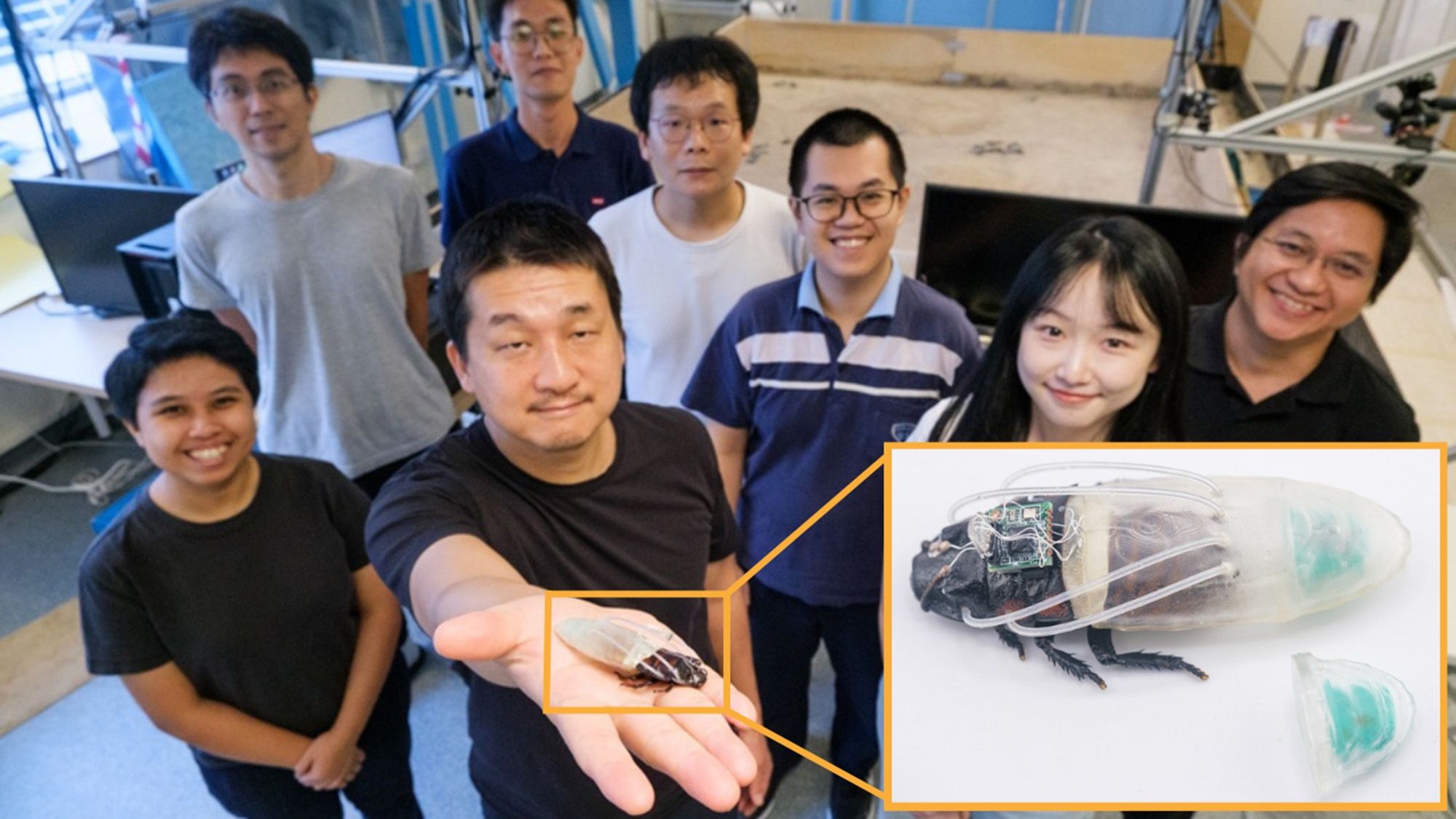
The trick lies in how the bug breathes. Or rather, how the suit handles it for them. Oxygen doesn’t come from the water, which makes sense, but from a built-in generator. Silicone tubes channel the gas right to the cockroach’s spiracles, the tiny breathing holes along its side.
“Our approach combines a soft waterproof shell with the chemical oxygen generator, keeping natural mobility intact while shielding the insect from hostile environments,” Shinjiro Uze says.
He is a professor at Waseda University, a co-author on the new Nature Communications study published on June 29.
It’s not just about staying dry. Low-oxygen zones are handled too.
Why use bugs at all
Cyborg insects aren’t new. We have been putting electronic controllers on living critters to guide their movements for a while now. The real advantage? Batteries die. Insects run on biological muscle and don’t need a rechargeable battery pack the size of their head.
Look at Myanmar in March 2026. A 7.7 magnitude earthquake hit hard, killing over 3,700. These cyborg roaches went into rubble that tiny robots simply couldn’t reach or sustain in for long enough. They scouted hard-to-access pockets.
Hirotaka Sato runs the lab behind this. He’s spent more than a decade working on this tech at Singapore’s Nanyang Technological University now. This new diving suit extends his vision.
Disasters flood. Rubble stays wet. Normal roaches drown. Cyborg roaches don’t.
Inside the shell
The hardware is simple. Almost too simple.
- A flexible, waterproof outer shell.
- Four silicone tubes linking to the spiracles.
- A 3D-printed tank that holds the gas.
The oxygen chemistry is old-school but effective. Manganese dioxide goes on a sponge inside the tank. Hydrogen peroxide gets injected in. The mix breaks down, slowly, creating oxygen. UV adhesive seals it all shut.
Leak-proof. Light enough to carry.
“The key challenge was keeping it small and flexible,” Uze noted, “yet powerful enough for hours of submersion.”
The test drive
They didn’t just build it; they threw them in water. Madagascar hissing cockroaches. They placed them in tanks and sent them through plastic tubes designed to mimic the crushing pressure and lack of air in collapsed tunnels or submerged drains.
Three hours. They lasted three hours.
Imagine inspecting a flooded pipe without sending a human diver or risking a expensive drone that sinks immediately. Beetles next maybe? Locusts? Who knows.
“It works like the tank human divers use, but attachable and removable without hurting the insect,” Sato stated.
It sounds grim if you think about the insect. Less grim if you think about searching for survivors in a flooded basement.
The suit gets sensors soon. Navigation too. Disaster simulation testing follows. The bugs are ready, at least for now. They swim, they breathe, they wait.
What will we ask them to find first?